


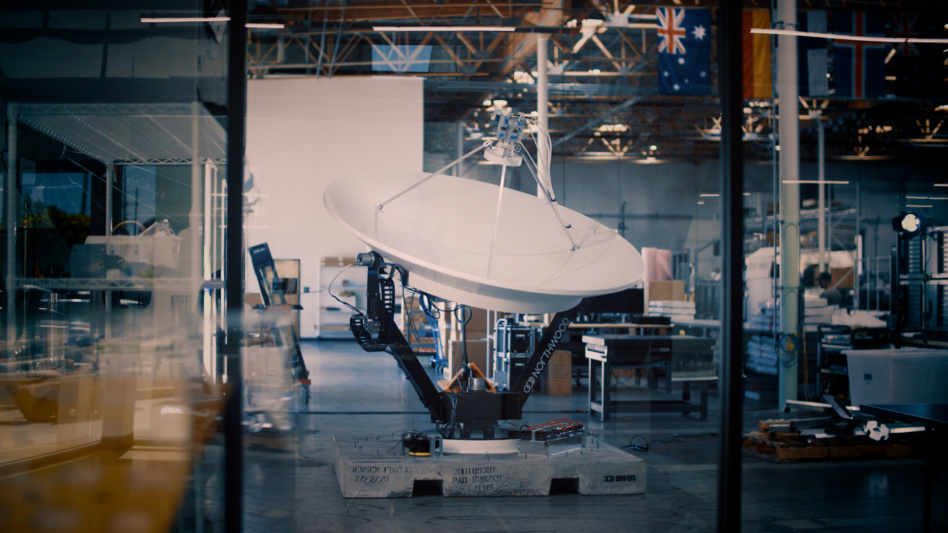
Northwood Space unveiled a new satellite ground antenna today—called Prism—as part of an effort to significantly increase its ground station network capacity over the coming years.
The new hardware comes amid Northwood’s rapid global expansion of its physical ground station footprint, and will allow the company to support more data downlinks over a wider range of frequencies.
“We need to treat the future of space like the internet, where you’re talking about very intense data loads, you’re talking about high levels of reliability, and treating space like a high-utilization resource,” CEO Bridgit Mendler told Payload.
The blueprint: Northwood operates six ground stations on two continents, but the company is on the verge of a rapid proliferation, both in the number of ground stations, and in the number of satellite links each site can support.
- By the end of 2026, Northwood plans to operate 12+ ground stations, each capable of 10 Gpbs of connectivity;
- By the end of 2027, Northwood aims to more than double its link capacity again, and will target 100 Gpbs in high-demand locations;
- By 2028, the company aims to have enough throughput capacity to rival terrestrial internet peering exchanges, with an aggregate throughput as high as 22+ Tbps across the network.
To fuel this increase, Northwood is putting its $100M Series B—announced in January—to work on multiple fronts.
- Northwood has secured a new antenna production facility that is designed to churn out 100+ antennas per year at full capacity, according to Mendler. It’s expected to come online in the next two months.
- Northwood is also locking down new ground station facilities to achieve global coverage this year.
The growth is further enabled by Northwood’s ability to ship, unpack, and turn on new antennas with “LEGO brick” like ease. In its most recent deployment, for example, Prism was unboxed and turned on within three and a half hours, according to Mendler.
Just in time: Northwood’s planned expansion comes as demand for data downlink capabilities is expected to balloon in the coming decade.
In October, space consultancy Novaspace predicted that 43,000+ new sats could launch before 2035—but these new sats could compound demand for data downlink capabilities even further, as applications like in-orbit data centers, and direct-to-device comms take off.
“We are in a mode of scaling capacity right now across both of our product lines,” Mendler said. “That translates to more contact time, more uptime, more overall data being transmitted across the network, which is a key concern for space operators.”
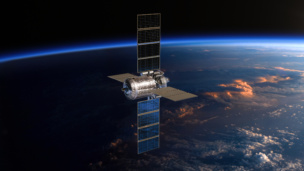
Exclusive: DoD Taps Orbital Operations for Cryogenic Spacecraft Demo
The Long Beach, CA, startup has won up to $35M from the DoD under a prototype Other Transaction Agreement to fly a full-scale, in-orbit demo of Astraeus—its cryogenic-maneuvering vehicle.

Inside Starburst’s First Flight, and Portal’s New Bothell Office
“I feel like 80% success now,” CEO Jeff Thurnburg said. “But honestly, to get this far this fast, I’m tempted to call it 100%.”

European MNOs Join Forces to Explore Joint MSS Spectrum Bid
Deutsche Telekom, Telefónica, Orange, and Vodafone plan to establish ground network infrastructure across Europe, and partner with an as-yet undetermined satellite operator for the D2D connection.
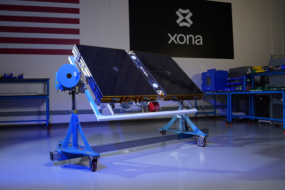
Xona Raises $250M Series D to Scale Commercial GPS Constellation
Xona’s long-term plan is to build a ~258-sat constellation to offer an upgraded commercial alternative to government GPS networks.

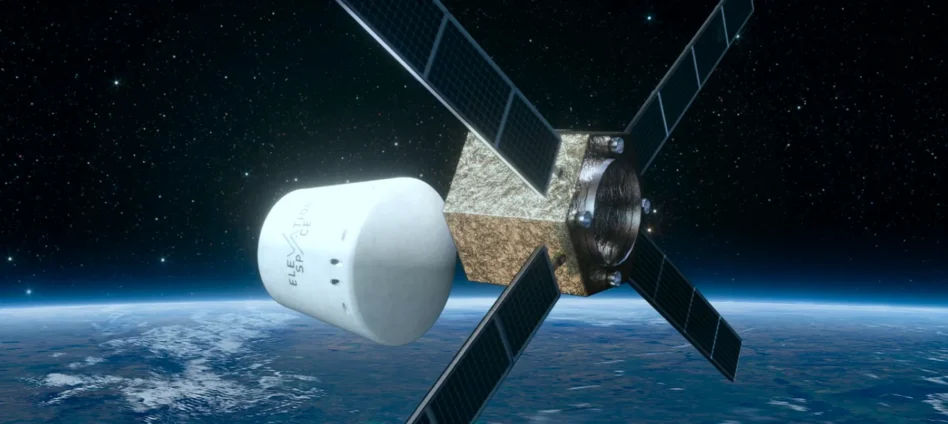
ElevationSpace, the Japanese satellite reentry startup, raised a $40M Series B, bringing the company’s total amount raised to $63.5M, the company announced Friday.
The reentry sector is getting almost as hot as the capsules themselves. ElevationSpace is betting its edge lies in Japan’s deep history with small-satellite lift-guided-reentry technology, by developing its spacecraft in collaboration with JAXA and Tohoku University.
Investors in the round included SPARX Asset Management and Beyond Next Ventures, which both invested in ElevationSpace’s Series A. The round also included several corporate investors, such as automotive parts supplier Toyoda Gosei and legacy printing conglomerate Dai Nippon Printing.
Keep reading