


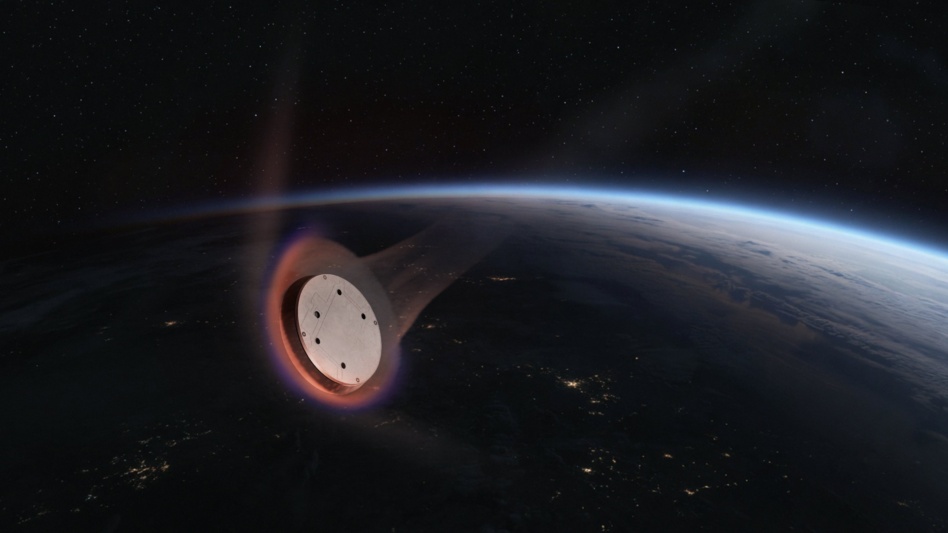
PARIS, FRANCE—Luxembourg-based Space Cargo Unlimited announced this week that it secured a dedicated mission on SpaceX’s new Starfall reentry vehicle, expected to launch on a Starship rocket in 2028. CEO Nicolas Gaume told Payload that the company has already sold one-third of the vehicle’s 1,000-kg capacity—and expects to have customers locked in for half of the vehicle by the end of the year.
Demand appears to be skyrocketing, thanks to a new wave of pharmaceutical companies and researchers realizing that microgravity can provide benefits in drug discovery and research. As alternatives to the in-demand, retiring ISS begin to come online, Space Cargo is positioning itself to capitalize on as much of newfound supply as possible.
Howdy partner: Space Cargo aims to build relationships with a range of reentry companies to offer customers diverse options for sending manufacturing experiments to space and back, according to Gaume.
The company’s bookings and projects include:
- 7 flights on ATMOS Space Cargo’s Phoenix reentry vehicle, the first of which is expected to fly next year;
- A mission on Dassault’s VORTEX reentry vehicle;
- A mission with ElevationSpace’s ELS-R reentry vehicle;
- Another mission on ESA’s Space Rider spaceplane.
- Space Cargo is also developing its own reentry vehicle in partnership with Thales Alenia Space—called REV1—which is based on ESA’s Space Rider.
On these future missions, Space Cargo plans to fly its vehicle-agnostic payload—called BentoBox—which provides a standardized, autonomous factory for in-space manufacturing and research.
Star of the show: Compared to the rest of the pack, however, Starfall stands out. Starfall’s capacity allows Space Cargo to fly as many as 10 times more payloads for customers than other vehicles. Starfall is also designed to offer considerably more power, which, in turn, allows Space Cargo to offer better services and better economics to its customers, according to Gaume.
“The level of volume and power offered by Starfall is a paradigm shift,” Gaume told Payload. “The platform only works if it provides tools and efficacy—not for our customers, but for our customers’ customers…and we’re obsessed with the customers of our customers.”
No matter the vehicle it’s flying on, the goal for Space Cargo remains the same: to make it so that researchers on Earth can easily transfer their terrestrial lab tech to space, without needing to learn the ins-and-outs of how to operate in orbit.
“We aim to despaceify space, allowing equipment and experiments from the [terrestrial] lab to fly in orbit,” Gaume said. “We want space to learn bio, not the other way around.”
European Space Startups Steal the Show in Paris
European space startups have long wondered when big institutional buyers would stop handing large contracts exclusively to legacy A&D primes. During the last few weeks, it’s become clear that time is now.
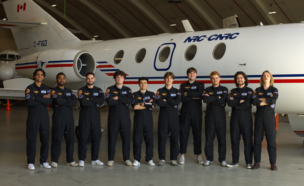
Icarus Robotics Completes Parabolic Flight Test Ahead of ISS Mission
Icarus Robotics completed a four-flight parabolic test campaign of its free-flying robot—named Joy—in preparation for its first ISS mission in 2027.
Hydrosat Unveils Osiris Constellation Ahead of 2027 Launch
Very rarely can someone offer you the best of both worlds, but Hydrosat’s newest constellation claims to do just that.
SEOPS Books Five Launches on Isar’s Spectrum Rocket
Isar Aerospace became the first European launch startup to reach orbit less than two weeks ago, and already the market is demanding more.
The robots are coming for our jobs. Luckily, they’re replacing astronaut labor first—phew.
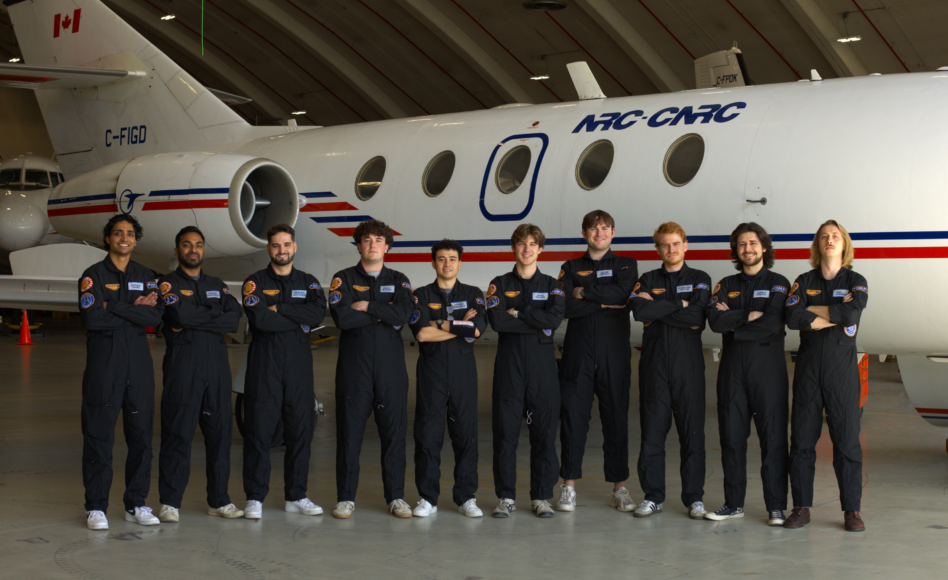
Icarus Robotics, the startup building robotic systems to operate on crewed space stations, completed a four-flight parabolic test campaign of its free-flying robot—named JOY—in preparation for its first ISS mission, which is expected to launch in partnership with Voyager in 2027.
“The robot worked way better than we expected,” CEO and cofounder Ethan Barajas told Payload. “We have very, very high confidence in our ISS deployment now.”
Keep reading