


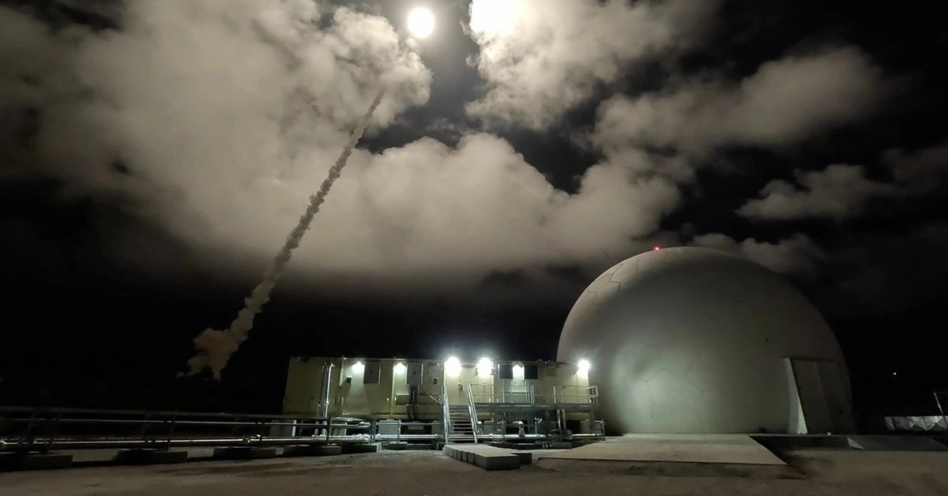
Making President Trump’s “Iron Dome for America” a reality will require a rapid expansion of US space systems, according to a paper published yesterday by the Moorman Center for Space Studies, a National Security Space Association think tank.
In the paper, Moorman Center chair Chris Williams highlighted changes that will be required to bring the Iron Dome to life, including increased investment and urgency—plus a coordinated deployment of space capabilities within DoD.
New capabilities: Trump’s executive order directs the US to beef up its space-based missile defense capabilities—and to do so quickly to keep pace with rapidly advancing space-based missile tech from adversaries. In response to the EO, the Missile Defense Agency issued an RFI to identify defense technologies that can detect and defeat ballistic, hypersonic or other advanced aerial attacks within the next five years.
- Space-based sensors: The EO calls for speeding up the development of various space-based sensors already in progress, including the MDA’s Hypersonic and Ballistic Tracking Space Sensor and the SDA’s Proliferated Warfighter Space Architecture.
- Space Based interceptors (SBIs): The EO also directs the DoD to develop SBIs that can disrupt or destroy ballistic missiles during their boost phase, and Williams estimates this could require a constellation of ~1,500 SBIs in LEO.
Critics say these improvements are likely to require big adds to the federal budget, but Williams argued the miniaturization of space systems components and the reduction in launch costs boost affordability.
Unanswered questions: While it’s still early days for the Iron Dome as a concept, Williams highlighted some key issues that must be addressed before such a system could come online, including:
- What are the requirements and which departments of the DoD will head up the system?
- Which office within the Pentagon will own the acquisition process, which systems will be prioritized, and what will be the rules of engagement for military operators?
- How much of the capabilities will be public knowledge vs classified, and where will the money come from to purchase all of the systems necessary for the Iron Dome to function?

State Department Taps Trio for $5M Space Diplomacy Push
At last week’s second annual US Space Forum, the US Mission to the International Organizations in Vienna launched Project Constellation, a $5M effort to build international space partnerships.

Exclusive: EraDrive Lands $13M DoD Award For Autonomy Module
EraDrive won a $13M DoD award, under which the Space Force will buy an undisclosed number of the company’s Era-Node vision-based autonomy modules.

NASA Signs Space Nuclear Pact, Says Moon Base Is Ahead of Schedule
Isaacman gave updates at the White House’s “Science: A New Golden Age Summit.”
Europe’s Space Defenses Fall Just Shy of Weaponization
Europe doesn’t have any weapons in space—but that doesn’t mean the region is comfortable flying around in orbit defenseless.


MDA Space won a $1.1B CAD ($768.1M) contract from Globalstar to build the company’s next-generation LEO constellation, the companies announced yesterday.
Under the contract, the Canadian space company will build 50+ AURORA sats for the American satellite connectivity company, though the announcement did not lay out a time frame for delivery or launch.
“With the full contract now in place, we are moving full speed ahead on the program,” MDA CEO Mike Greenley said in a statement.
Keep reading