



Hubble Network, a Seattle startup, launched its Bluetooth Low Energy (BLE) finding network today to track devices anywhere in the world.
Hubble’s finder network comprises seven satellites in orbit, including four that launched on the recent Transporter-14 rideshare mission. These satellites add global coverage to a network of 88M+ ground-based Bluetooth scanners at logistics gateways, in smartphones, or in infrastructure operated by partners.
In 2024, the company said that it demonstrated the first-ever ground-to-space Bluetooth connection. Hubble now plans to operate 60 spacecraft by 2028 to offer near-real-time coverage.
Track stars: Hubble was founded in 2021 by big names in the location-tracking world.
- Alex Haro: Cofounder of Life360, the family-tracking company that acquired Tile in 2021.
- Ben Wild: Cofounder of Iotera, the IoT tracking startup; its technology would later help form Amazon Sidewalk, a system that extends Wi-Fi connectivity through Amazon Ring cameras.
- John Kim: An aerospace engineer, with experience at SpinLaunch.
“The existing cellular and satellite networks were sort of fundamentally broken for these finder-like applications,” Haro, Hubble’s CEO and cofounder, told Payload. “Think about AirTags, or Tiles, or any of these kinds of use cases. There’s no cellular satellite network that is very global, very battery efficient, and very cost efficient.”
While most Bluetooth use cases send lots of data over short distances—sending high-fidelity audio to a Bluetooth speaker that cuts out when you leave the room, for example—the Hubble team figured that by accepting a lower data rate, they could send location data to satellites.
To accomplish the feat, the team developed and patented technology for a satellite-based antenna array that could identify the quieter Bluetooth signal from orbit.
Plug and pay: Nearly every modern device comes equipped with Bluetooth capabilities, and Hubble customers can input software to connect their devices to the network.
Once Hubble’s 60-sat constellation is up and running, the network will be able to offer near real-time tracking data anywhere in the world, and will aim to help companies keep an eye on assets across shipping lanes, and in client warehouses.
Raising Hubble: Completing the constellation, however, will be no simple task. Haro estimates that each of Hubble’s 25kg cubesats cost $1.5M to build, launch, and operate.
Hubble raised a $20M series A in 2023, but with a total constellation cost of nearly $100M, it’s likely the company will raise another round of funding to complete the rollout.
To grow capacity in the future, Hubble also expects to increase the number of antennas on each satellite from over 100 today, to a few thousand in later iterations.

Reflex Aerospace Taps Arkadia Space for 2027 Mission
Reflex Aerospace selected Spanish startup Arkadia Space to provide a propulsion system for its satellite mission, launching in 2027.
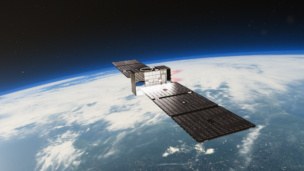
NewOrbit Raises $18.5M to Build VLEO Spacecraft at Scale
While NewOrbit has yet to fly in any orbit, the company is targeting a first flight of its VLEO-capable NEO-1 satellite in 2028.
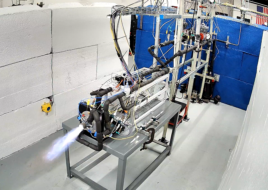
Juno Propulsion Raises $1.4M Pre-Seed for RDE Flight
The $1.4M pre-seed investment round will fund the completion of its first flight-ready rotating detonation engine (RDE)—called Project Iris—ahead of its inaugural demo mission in 2027.
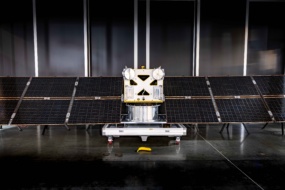
AstroForge Completes its DeepSpace-2 Spacecraft
DeepSpace-2 will aim to demonstrate the company’s ability to rendezvous with an asteroid and set the stage for future asteroid mining missions before the end of the decade.
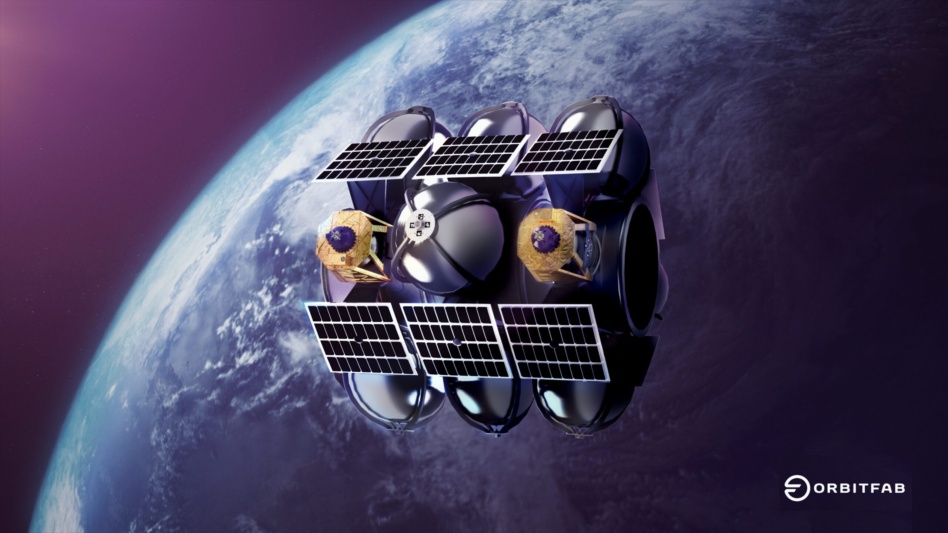
Orbit Fab UK, the company building satellite refueling stations in orbit, made two announcements today that may open the door for xenon gas refueling.
“We’ve got missions planned for depots, and customers, and shuttles in space for hydrazine. We can add to that depot a xenon tank, then a xenon shuttle, so we can serve whole new customers,” Jake Geer, managing director of Orbit Fab UK, told Payload. “That’s where we need to be to fuel that thriving in-orbit economy that we all want to see.”
Tele-can do: Orbit Fab’s ESA contract, the company’s first as a prime, tasks it with helping telecom operators retrofit their sats with RAFTI refueling ports. Geer expects these satellites will launch before the end of the decade, after which refueling could come whenever the satellite operators need more juice.
Orbit Fab could refuel sats soon after the machines make their orbit raise to GEO, or at any point in their missions to add more maneuvering budget, increase time on orbit, or provide the final kick necessary to head for a graveyard orbit.
