


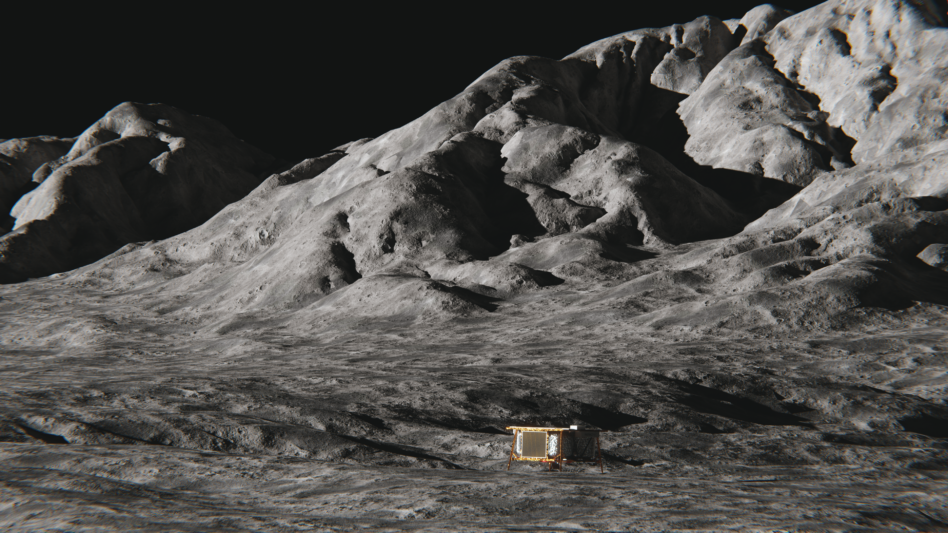
Instinct Space announced a significant pivot today from helping lunar surface missions find their way to getting in on the surface action itself.
The London-based startup joined Y Combinator in 2025 with the aim of developing a lunar-orbiting GPS constellation. Now, the company has shifted its vision, unveiling plans to build low-cost lunar landers, which will be capable of reaching the lunar surface from LEO.
“We explored the idea of building a small GPS-like constellation around the Moon, and it was precisely that experience that led us to work on lunar landers,” Instinct CEO Alex Piñel Neparidze told Payload. “We found that securing a launch was very expensive and difficult, and all potential customers are effectively stuck down here on Earth for the same reason. So, we pivoted to tackle the bigger problem.”
How it works: Lunar landers often require expensive, dedicated Moon-bound launches to reach the lunar surface. However, Instinct plans to leapfrog off low-cost rideshare flights to LEO. The idea is to optimize for cost, and to fly smaller landers on more frequent missions, allowing Instinct to pass along savings to payload operators.
Instinct is scheduled to fly its first lunar mission in late 2028, where its dishwasher-sized lunar lander will carry 20 kg of payload to the Moon for about $550,000 per kg.
- The vehicle will weigh ~650 kg when fully fueled.
- It will rely on an electric pump-fed engine and four small attitude thrusters, running on a mix of hydrogen peroxide and kerosene, which can provide 6 km/s of Delta-v—enough to bring 20 kg of payload from LEO to the Moon. The same prop system will perform the landing burn on the lunar surface.
- The vehicle is launcher-agnostic, and missions will take about four months to reach lunar orbit.
- The vehicle is designed to survive a full lunar day, or about 14 Earth days, on the surface.
“You can think of it as a kind of kick-stage OTV with legs,” Piñel Neparidze said. “At the end of the day, I suppose it’s also less risky to launch 10 smaller missions at the cost of one bigger mission.”
Demand cycle: Instinct is still in the development phase, using the ~$1.2M it raised while at Y Combinator to test its propulsion and navigation systems for the future lander, according to Piñel Neparidze. But already it’s seeing demand for low-cost access to the lunar surface.
In May, the company signed an agreement with Polimak Space, a Luxembourg-based startup building lunar ISRU tech, to explore sending a regolith-handling payload on future lunar missions.
Ultimately, Instinct is betting that demand for access to the Moon will rise as costs fall, and by demonstrating a cheaper option company officials hope to tap into a new wave of international demand.
“We would love to take part in all these American plans to go to the Moon,” Piñel Neparidze said. “There was also, from what we found, a lot of interest abroad…all these countries that do not have access to CLPS are looking for a lander to get them up there, so we’re really eyeing both sides of the Atlantic.”

NASA Outlines the Details of Artemis III and IV Missions
NASA is still on track to return US astronauts to the Moon in 2028. Today, officials shared a progress update on their efforts, as well as the finer details of the mission plans for Artemis III and IV, targeting flights in 2027 and 2028, respectively. Long story short: NASA remains confident it can meet the…
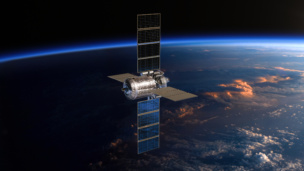
Exclusive: DoD Taps Orbital Operations for Cryogenic Spacecraft Demo
The Long Beach, CA, startup has won up to $35M from the DoD under a prototype Other Transaction Agreement to fly a full-scale, in-orbit demo of Astraeus—its cryogenic-maneuvering vehicle.

Inside Starburst’s First Flight, and Portal’s New Bothell Office
“I feel like 80% success now,” CEO Jeff Thurnburg said. “But honestly, to get this far this fast, I’m tempted to call it 100%.”
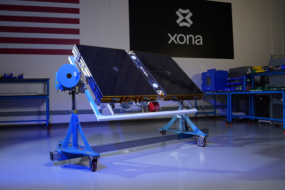
Xona Raises $250M Series D to Scale Commercial GPS Constellation
Xona’s long-term plan is to build a ~258-sat constellation to offer an upgraded commercial alternative to government GPS networks.
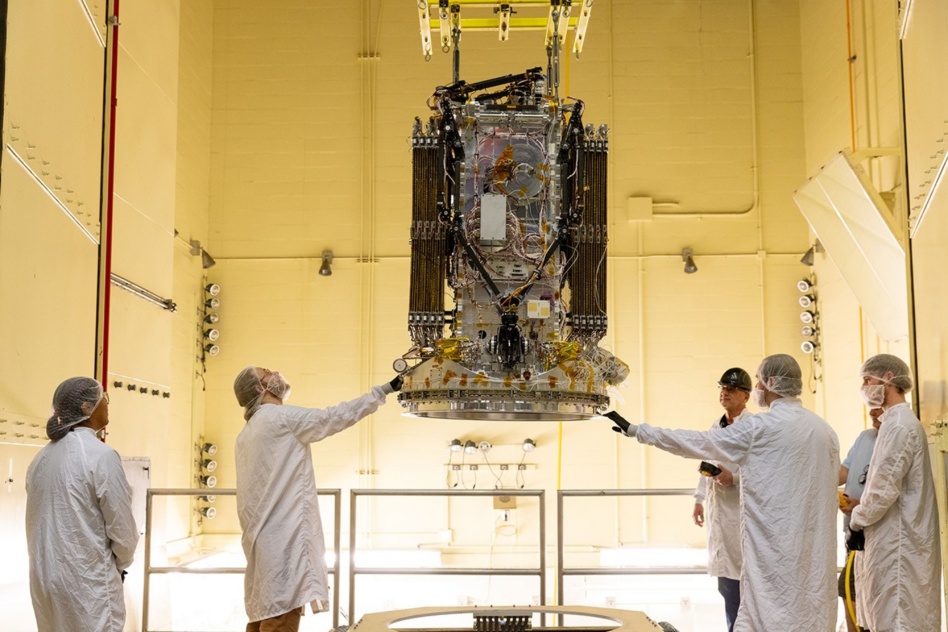
Katalyst Space announced $12M in funding yesterday to support the development of its first GEO-capable robotic servicing spacecraft—called NEXUS—which is scheduled to launch its debut mission on an Arianespace Ariane 6 rocket in 2027.
Geodesic Capital led the round, which included participation from Fortitude Ventures and other undisclosed sources.
Level up: Katalyst’s first GEO mission in 2027 will be preceded by a mission closer to home, launching this month.
Keep reading