


Blue Origin appears to be recovering well from its New Glenn explosion last month—all thanks to some clever engineering.
Blue maintains it will fly again this year. CEO Dave Limp said yesterday that the company will ramp up flights quickly with a new pad design. The company plans to join rocket stages in a facility, ferry an already integrated New Glenn to the launch pad, crane the rocket there to a vertical position, and then mate payloads.
NASA, however, hasn’t decided if these changes will be enough to meet its ambitious lunar plans. Blue has received several Moon contracts from NASA, and remains one of the vendors being considered to fly with Artemis III NET 2027.
“We’re working with Blue Origin very closely to understand their timelines to recovery, and also looking at other options,” Moon Base Program Executive Carlos García-Galán said yesterday during a livestreamed Moon Base update.
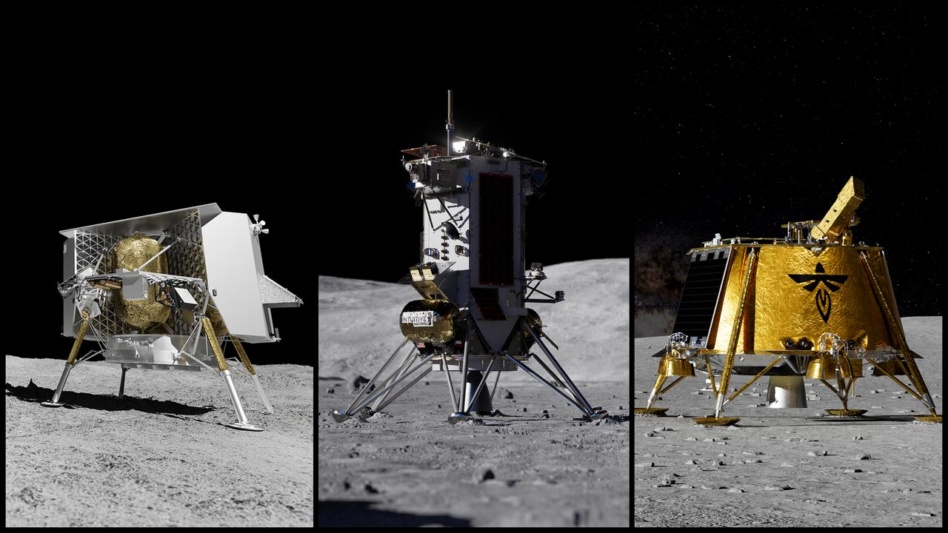
6, not 7: At the Moon Base event, which the agency is now planning to hold monthly, NASA also announced ~$600M in new CLPS contracts:
- Astrobotic Technology for two Peregrine missions, collectively worth $297.9M;
- Intuitive Machines for a Nova-C mission, worth $148.3M;
- Firefly Aerospace for a Blue Ghost mission, worth $144.2M.
NASA said the vendors plan to fly “updated versions of already-flown lander designs” to try to meet the agency’s goal of monthly landings with NASA payloads. And there’s more. In an effort to use every available resource, NASA may send a Mars Perseverance rover prototype—standing by as a twin for engineers to diagnose issues for its Martian sibling—lunarside to “prospect for resources.” The proposed mission is called PROMISE (Polar Rover for Observation, Mapping, and In-Situ Exploration).
Looking ahead: NASA’s next steps include asking industry for lander proposals to send payloads such as “a power and avionics technology demonstration,” an unspecified “science manifest,” and an optical payload to the lunar surface. NASA is planning to roll out even more contracts soon.
“NASA also will share an open solicitation for Moon Base technology demonstrations, and seek a lunar communication and navigation relay constellation to enable improved communication between Moon Base elements and Earth,” the agency stated.
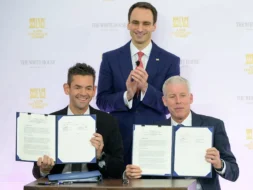
NASA Signs Space Nuclear Pact, Says Moon Base Is Ahead of Schedule
Isaacman gave updates at the White House’s “Science: A New Golden Age Summit.”
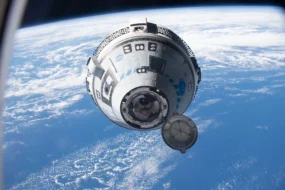
Starliner Targets Uncrewed Flight NET December, Crewed Follow Up in 2028
NASA and Boeing officials announced Monday that they have upgraded and redesigned Starliner following a dicey crewed test flight in 2024, which left NASA astronauts Butch Wilmore and Sunita Williams stuck on ISS for nine months.

Isaacman Doubles Down on New NASA Model for International Partnerships
Isaacman is less than a year on the job, but he’s already upended the way the agency interacts with the rest of the world.

Isaacman Promises ‘Artemis Acceleration’ Update Next Month
“There’s a lot of ingredients—so many ingredients—that need to come together for that landing, and we owe everybody an update,” he said. “There’s going to be an Artemis acceleration update…sometime in early October. Maybe it might even coincide with the [ISS] Crew 13 launch.”

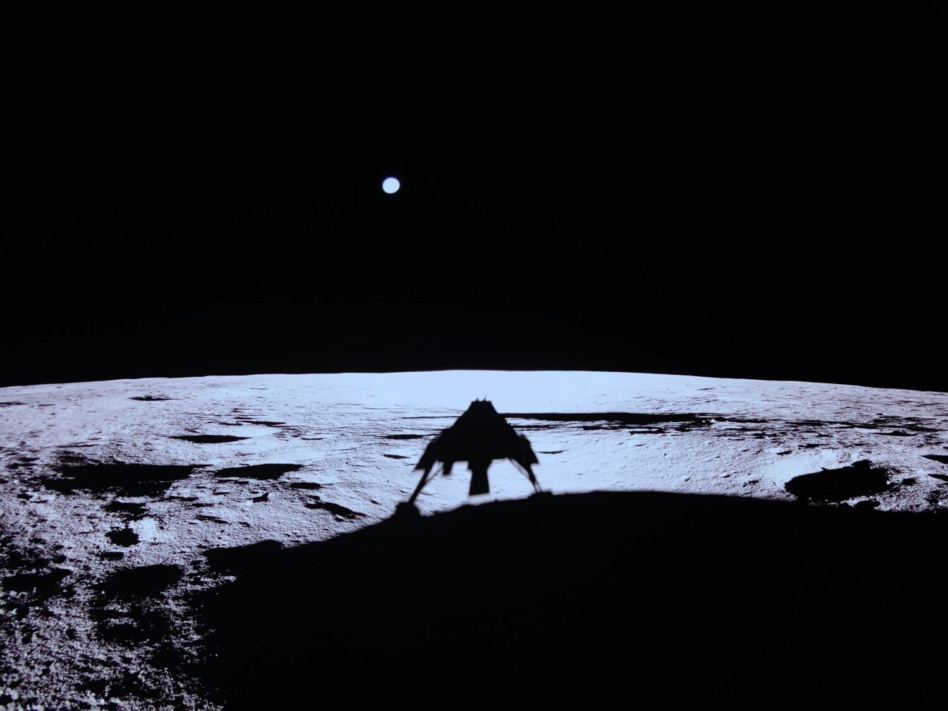
Get in, landers, we’re going to the Moon.
Background: NASA established the Commercial Lunar Payload Services (CLPS) program in 2018, in response to the call in Space Policy Directive-1 to return people to the Moon. Under the program, NASA awards contracts for commercial lander companies to bring space agency payloads to the lunar surface. The companies can then sell extra space on each of these NASA-subsidized missions to commercial payloads looking for a ride to the Moon.
CLPS is intended to build on NASA’s successful commercial cargo and crew programs, allowing the agency to support a still-young commercial lunar delivery economy with the goal of eventually being one customer of many.
Keep reading