


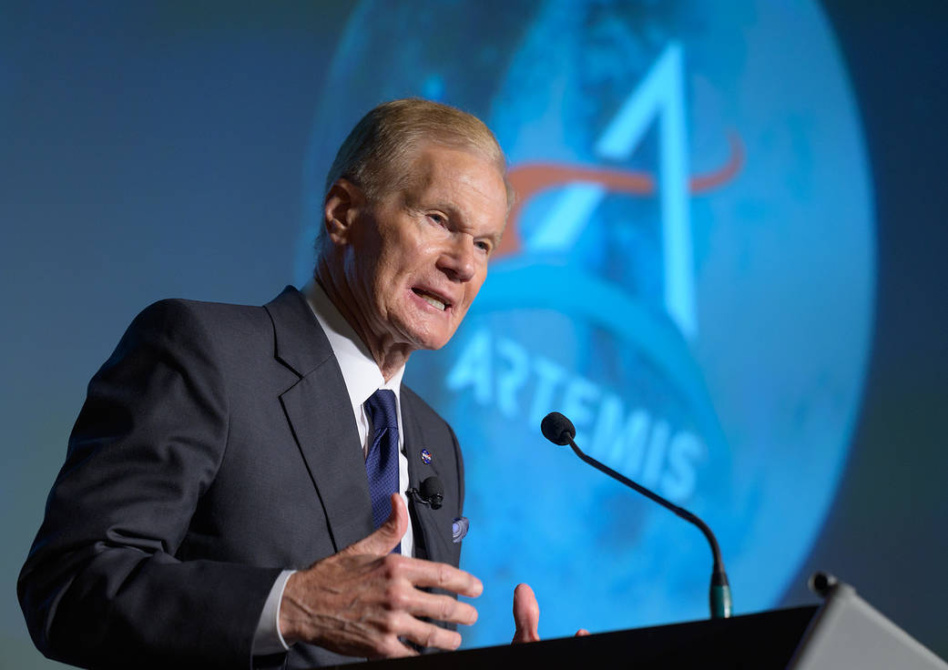
Lawmakers quizzed NASA Administrator Bill Nelson on Thursday about what the space agency needs to keep the first crewed mission to the Moon’s surface on track for a 2025 launch date.
In addition to Artemis, members of the House Science, Space, and Technology Committee asked the former FL Democrat how the US could stay competitive with China in LEO, how the agency is cooperating with Russia on the ISS, and how a Republican-backed 22% budget cut to civilian agencies would impact everything from returning samples of Martian soil to Earth to tracking climate change and extreme weather from space.
Surface or bust
Lawmakers asked excitedly about Artemis 3, which will use a lunar lander version of Starship to bring NASA astronauts to the Moon’s surface for the first time since Apollo. After Starship blew up mid-air during its first orbital test launch last week, Rep. Frank Lucas, R-OK, who chairs the committee, asked Nelson his level of confidence that the mission would launch as expected in late 2025.
Nelson acknowledged that Starship is the only piece for the mission still in development, since Orion and SLS flew on Artemis 1.
“It blew a hole in that launch pad, so I have asked so I can report to you as of today that SpaceX is still saying that they think it will take about at least two months to rebuild the launch pad and concurrently about two months to have their second vehicle ready to launch,” Nelson said.
“The explosion, that’s not a big downer in the way that SpaceX does things,” he continued. “I’m fairly confident [in the timeline], but there are a lot of things that still have to be done.”
Zing
Not all the lawmakers were convinced, despite Nelson’s optimism. Shortly after Nelson explained that SpaceX’s lander was chosen because SpaceX “underbid everyone else by half,” Rep. Zoe Lofgren, D-CA, the committee’s ranking member, responded with a dig.
“When I saw that rocket blow up, I thought, ‘Thank God there’s no people onboard,’” she said. “Sometimes the lowest bidder is not always the best choice.”
Like Christmas morning: Nelson came bearing a gift for lawmakers: a copy of the 2010 NASA Authorization Act that flew in space on the Artemis 1 mission last year.
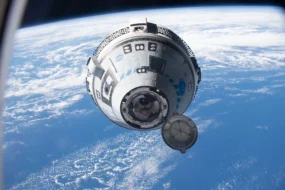
Starliner Targets Uncrewed Flight NET December, Crewed Follow Up in 2028
NASA and Boeing officials announced Monday that they have upgraded and redesigned Starliner following a dicey crewed test flight in 2024, which left NASA astronauts Butch Wilmore and Sunita Williams stuck on ISS for nine months.

Isaacman Doubles Down on New NASA Model for International Partnerships
Isaacman is less than a year on the job, but he’s already upended the way the agency interacts with the rest of the world.

Isaacman Promises ‘Artemis Acceleration’ Update Next Month
“There’s a lot of ingredients—so many ingredients—that need to come together for that landing, and we owe everybody an update,” he said. “There’s going to be an Artemis acceleration update…sometime in early October. Maybe it might even coincide with the [ISS] Crew 13 launch.”
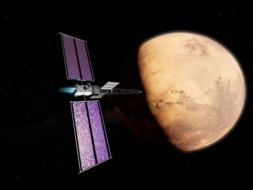
TRL11 Will Build Imaging Tech for SR-1 Freedom
TRL11 has received a NASA contract to provide imaging systems for the Space Reactor-1 (SR-1) Freedom mission to Mars.

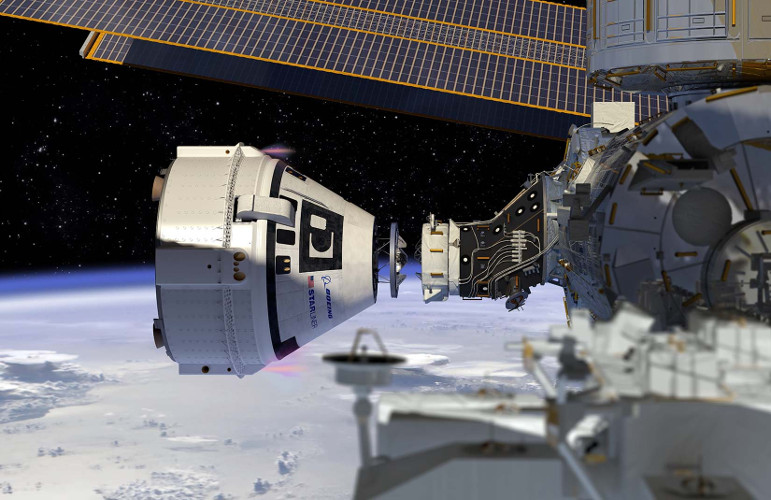
Boeing reported a first quarter loss of $1.27 per share on Wednesday, marking the company’s seventh straight quarter in the red, though this quarter was better than last.
Boeing attributed this to 737 MAX production issues, but still announced a plan to increase production from 31 to 38 planes per month. The company did see a jump in revenue from higher commercial and military sales.
The overall numbers:
Keep reading