



To anyone worried about “militarizing” the Moon, Jim Bridenstine has some sage advice: get over it.
During a fireside chat at Payload’s Lunar and Mars Economy Summit, the former NASA chief said the Moon and its orbit are prime real estate for sensors that are critical for nation security missions, and other nations will take advantage of it. The US should too, he argued, regardless of optics.
China: Bridenstine also explained how, in his view, the US fell behind China in the race back to the Moon—and how we could make up lost ground.
“Given what China is achieving, and saying they’re going to achieve…I think the probability of having us beat China to the Moon is very small,” Bridenstine said. “In the coming years, you’re going to see more and more spending from the DoD on [lunar remote sensing] capabilities. It’s going to be necessary.”
The bigger picture: If we wanted to plant boots on regolith before China (this millennium), we’d be spending our money differently, according to Bridenstine.
“There is a great misalignment between what politicians are saying and what contractors are delivering on,” Bridenstine said. “We have got to figure out an architecture. If the politicians are going to claim we’re going to beat China to the Moon, then we need to do something that gives us a chance to do that. And right now, that’s not where we are.”
The Artemis plan requires massive technological leaps in short order: completing the vehicle’s development and test campaign, qualifying it for human flights, solving in-space refueling, flying ten or more refueling missions, sending humans to the Moon and getting them back in one piece.
If speed were really the number one goal, Bridenstine said, we could go a lot faster with a lot less effort.
Price tag: In another panel at the summit, Jim Zukin, a cofounder of Houlihan Lokey ($HLI)predicted the first phase of the lunar infrastructure build out will cost $23B. Zukin laid out an initial footprint that is financially driven by sales of liquid oxygen as fuel—and practically driven by semi-autonomous robots.
You want people in your lunar economy vision? Multiply that cost by 10 or 100, he said.
Dream big: How would Zukin invest $1B in the lunar and Mars industries, if financial gain was the goal? He said he’d split it down the middle: $500M to liquid-oxygen futures, and $500M to data-center development.
However—what if Zukin allowed the spirit of exploration to guide him? He said he’d go all=in on entertainment and tourism.
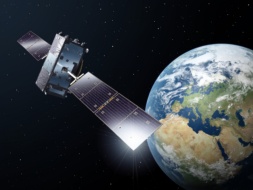
Europe’s Space Defenses Fall Just Shy of Weaponization
Europe doesn’t have any weapons in space—but that doesn’t mean the region is comfortable flying around in orbit defenseless.

Fortastra Raises $30M Series A to Fund its Next Security Spacecraft
The US military has weapons in space, and—with the orbital arsenal expanding—security is becoming a top priority.

Colorado Springs, Huntsville Team Up on Golden Dome
“It’s a transformed relationship between Colorado Springs and Huntsville,” Rep. Jeff Crank (R-CO) told Payload. “When I took office, I don’t think it was a bad relationship, but it was one where both communities were kind of looking over their shoulder at the other. That wasn’t good for America, and I don’t think it was good for Colorado Springs or Huntsville either.”
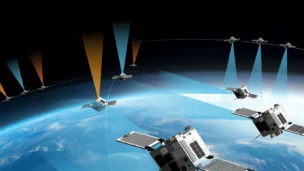
HawkEye 360 Turns its RF-Sensors to Orbital Targets
The DoD wants to better understand what’s going on in orbit. HawkEye 360 ($HAWK) has the inside scoop.
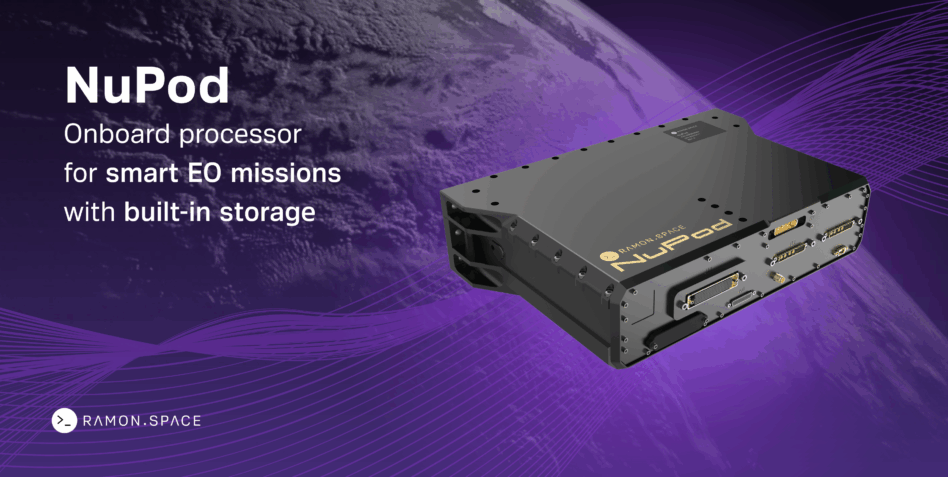
Earth Observation (EO) missions generate vast datasets which traditionally rely on ground-based processing. Unfortunately this processing model comes with considerable challenges like high latency and limited bandwidth, making it difficult to retrieve the real time insights that Earth Observation missions require.
Slow, costly, and inefficient, traditional ground-based processing like this has now become ill-suited to meet the demands of modern day EO missions. The solution lies in edge processing – transforming raw data into actionable insights directly in space and delivering real time intelligence with unmatched efficiency.
Ramon.Space has developed such a solution with their NuPod onboard processor. It combines advanced edge processing with terabyte storage in one compact system to allow operators to analyze data onboard and enable cognitive applications directly in space.
Keep reading