



Ubotica Technologies, the Dublin-based space AI company, raised $11M today to accelerate the commercialization of its AI-powered intelligence platform for maritime security.
Ireland’s Act Venture Capital and Finland’s Greencode Ventures co-led the round, which also included participation from Atlantic Bridge, a global growth equity technology firm and existing Ubotica investor.
“We spent the last eight years proving out our capabilities in orbital AI,” Ubotica CEO and cofounder Fintan Buckley told Payload. “We have the proof points now, on over ten different missions. We understand what it takes to deploy edge applications on board a satellite.”
Ubotica’s Orbital AI reduces response times by processing data closer to where it is captured, rather than transmitting it to Earth. The data is then coupled with risk-prediction algorithms and delivered to customers as intelligence.
From chips to ships: Ubotica is putting its real-time decision-making support to the test with its Live Maritime Intelligence platform, which aims to help customers detect emerging maritime threats in real time with satellite-derived insights.
Changing security concerns in Europe highlighted a gap in how quickly the EO technologies being used for maritime surveillance could provide answers, as governments grapple with threats to undersea cables and offshore energy assets, Buckley said.
Ubotica’s platform works to address a core limitation of traditional satellite surveillance, by dynamically tasking satellites across different modalities—whether these sats are optical, SAR, or RF—to ensure the right sensor is positioned over the right area at the right time.
The result? “To bring the best satellite to get the best image possible to actually understand what is going on in a particular maritime domain,” Buckley said.
Built to scale: Historically, deploying AI in orbit meant building a dedicated chip into a satellite before launch, which presented a one-time integration that locked software to hardware.
Ubotica has moved away from that model and its solution is hardware-agnostic, according to Buckley. As a result, the platform can be integrated on any satellite with edge-processing capabilities, meaning the company can scale as more on-orbit computers are launched.
“In two years’ time, where we have traction on our maritime solution—and we’re bringing that to multiple customers throughout the world—that’s where we see ourselves,” said Buckley.

Fortastra Raises $30M Series A to Fund its Next Security Spacecraft
The US military has weapons in space, and—with the orbital arsenal expanding—security is becoming a top priority.
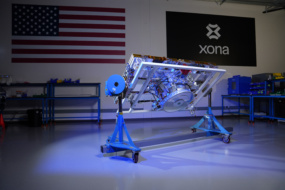
Exclusive: Xona Ramps Up Production Ahead of Pulsar Launch
With FCC approval in hand and six sats ready for the pad, Xona is turning to its next challenge: building the next 250.
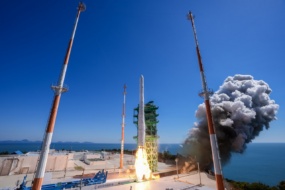
ArbaLabs Launches AI Verification Demo On South Korea’s Nuri Rocket
“In short, tons of companies are looking at the latest and greatest physical AI deployments,” ArbaLabs CEO Ashley Reeves told Payload. “Nobody is really thinking about putting some checks and balances on what these AI models are doing.”

Turkey Uses IAC Stage to Pitch Peace & Homegrown Hardware
During the 2026 IAC in Antalya, representatives from Turkey are leveraging the opportunity to showcase the country’s prgoress in space.
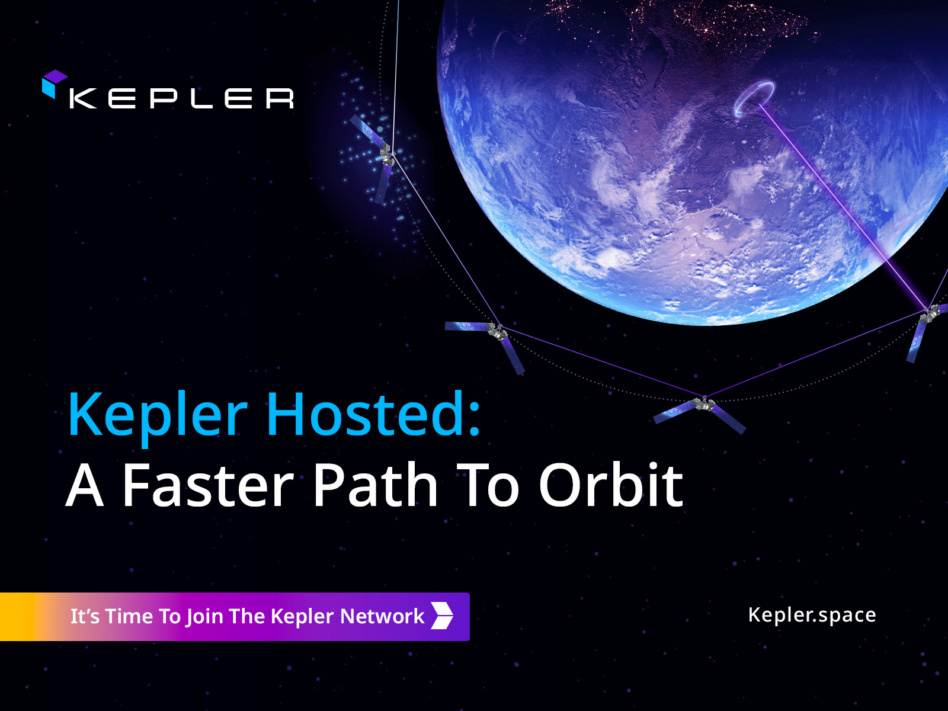
Historically, deploying a new capability in space required significant time, investment, and technical expertise. Companies often had little choice but to build nearly everything themselves—from spacecraft and payload integration to ground infrastructure and mission operations.
Today, the space industry offers a different model: hosted payloads.
“We’re seeing companies looking for the fastest, most economical way to get their capabilities into space, and their data back down to Earth,” said Beau Jarvis, Chief Revenue Officer at Kepler Communications.
Keep reading