


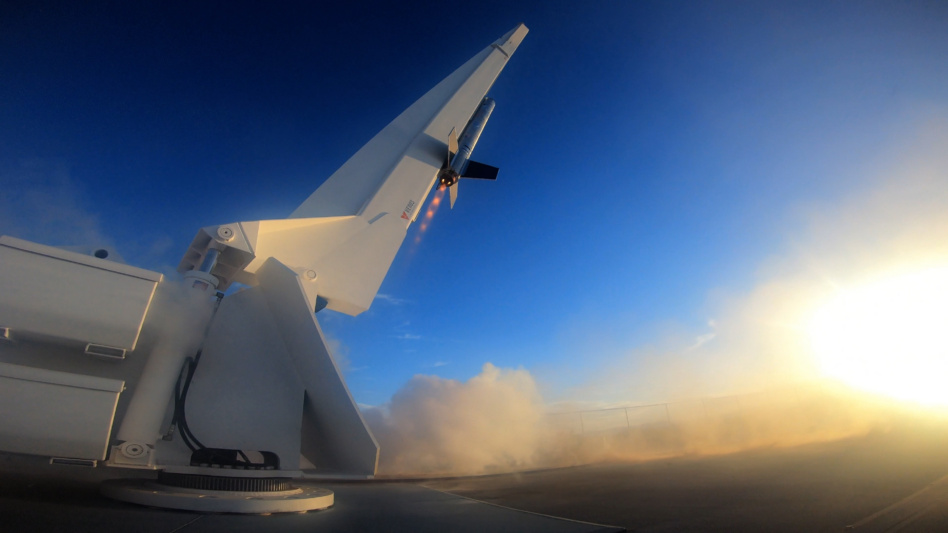
Venus Aerospace announced a $91M Series B today to fund the development and production of its rotating detonation rocket engine (RDRE) for DoD and commercial space missions.
Mercury Fund led the round, which included additional participation from Lockheed Martin Ventures, MESH, PEAK6, Draper Associates, Starboard Star Venture Capital, Green Sands Equity, and others.
The funding round is the latest in a string of news from RDRE engine companies, suggesting the more efficient rocket tech is having a moment in the industry.
Turning heads: In May 2025, Venus reported it was the first US company to complete a successful test flight of an RDRE-powered rocket. The launch validated Venus’ ability to operate an RDRE at high speeds, and ushered in a wave of demand.
“Once it finally flew, then all of a sudden the interest from different customers—and DoD and different applications—really started taking off,” Venus CTO and cofounder Andrew Duggleby told Payload. “The round is sort of the culmination of all of that interest, realizing that our engine has all sorts of applications.”
Venus plans to use the new capital to grow its team, invest in larger production capabilities, and fund follow-on demonstration flights, as the company narrows its focus on an engine architecture that can serve both defense and commercial space missions. The goal is to build a single engine that can provide thrust for multiple applications, including:
- An alternative for solid-rocket motors in military applications;
- In-space propulsion to power second- and third-stage rockets;
- Eventually powering high-speed aviation applications, acting as an additional source of thrust alongside a ramjet engine, according to Duggleby.
Reinventing the wheel: Rotating detonation engines are moving from academic concepts to flight-proven hardware at a rapid clip. Startups, including Stellar Alpina and Juno Propulsion, have recently closed investment rounds to fund the development of the new engine architecture for in-space applications. Other entities—including Astrobotic Technology and JAXA—have begun demonstrating their own versions.
The growing focus on RDRE is due, in large part, to the technical improvements it offers over conventional engines.
Venus’ RDRE is 15% more efficient compared to conventional rocket engines, according to Duggleby. But that’s not all.
- By using liquid propellant—made up of JP-10 (a synthetic jet fuel) and hydrogen peroxide—Venus’ RDRE can throttle its thrust that’s more efficient than the “light it and go” solid rocket alternative.
- The fuel choice allows the full propulsion system to be stored for a long period of time—a decade or more.
- Venus can also fly longer missions in space, compared to methalox fuel, which is prone to high boil-off rates in the vacuum of space.
All together, Venus’ RDRE can offer 50% to 100% improvement in its maximum flight range compared to the solid rockets, according to company estimates.
Without changing the engine itself, Venus can scale up or down the size of the propellant tanks to serve different missions. In the near-term, the company aims to grow its production capacity to lock down customers on both sides of the dual-use equation.
“The goal right now, is [to land] one major weapons contract, land one major space contract, because that way it’s still the one engine…let’s say 100 units a year,” Duggleby said. “Once you’re at low-rate production, then that means we can go raise the next round to get ready for 1,000 a year, 5,000 a year, or whatever that turns into.”

Skyrora Shifts Orbital Launch Timeline to 2030
First-mover advantage isn’t all it’s cracked up to be—at least, that’s the thought process for UK launcher Skyrora.
Transporter-18 Tests the Building Blocks of Orbital Data Centers
Few rideshares come with a theme, but SpaceX’s Transporter-18 had one: getting power to compute in orbit.

Satlyt Raises $8M Seed to Expand Its Virtual ODC Network
Satlyt was founded in 2024 by Afullo, an alum of SpaceX and Google who spent years trying to convince both companies to invest in in-space edge computing opportunities.

Foundational Raises £8.2M for Satellite Laser Ranging
Foundational emerged from stealth today with Europe’s largest space tech pre-seed round.

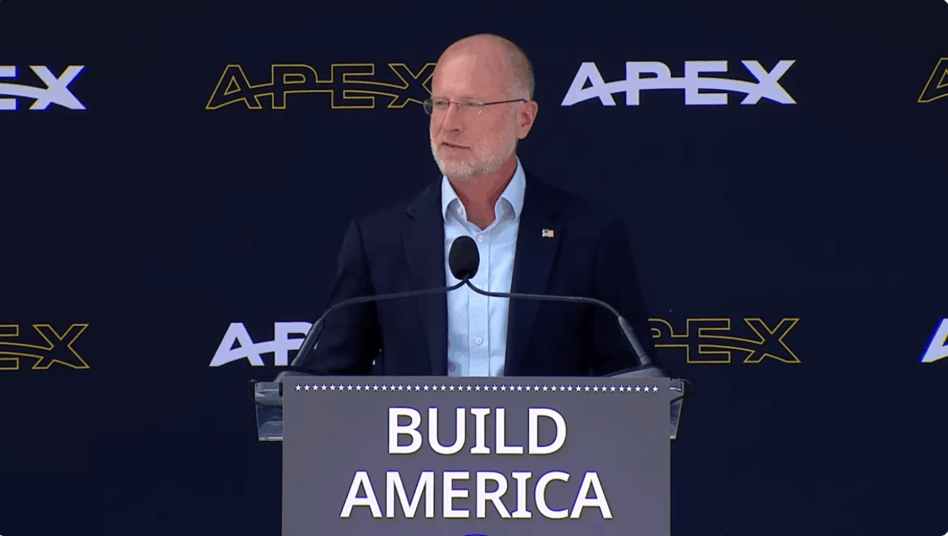
The FCC is set to vote this month on whether to adopt reforms intended to make it easier for operators to navigate the satellite licensing process.
FCC Chair Brendan Carr announced last week that the commission is expected to vote on the Space Modernization Order on July 22.
“Getting the regulatory framework right will determine if America wins this Space Race 2.0,” Carr said in a statement. “That is why the agency started a process last year to fundamentally change how we process satellite and Earth station operations.”
Keep reading