


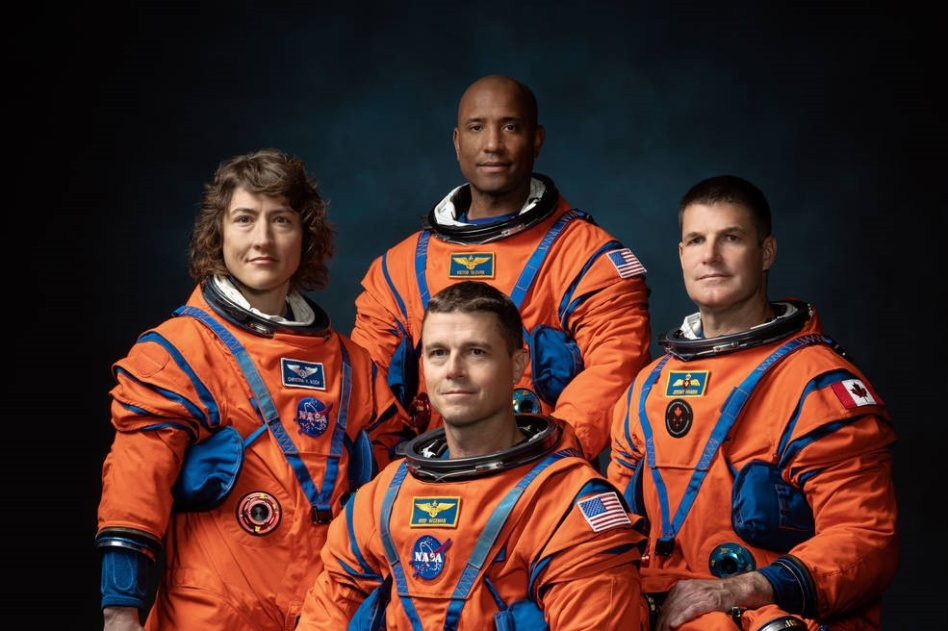
Humanity has picked its team for the first step in its grand return to the Moon. Yesterday, NASA revealed the crew of four that will circle the moon on the 10-day Artemis II mission.
Without further ado…Here’s the lineup:
- Reid Wiseman will serve as the mission’s commander. Wiseman is a member of the 2009 astronaut class, former chief of NASA’s astronaut office, and has spent 165 consecutive days aboard the ISS.
- Victor Glover will helm the ship as mission pilot. Glover is a former Navy aviator, has been a member of the astronaut corps since 2013, and piloted the Crew-1 mission to the ISS. Glover is the first Black person ever assigned to a lunar mission.
- Christina Hammock Koch is one of two mission specialists aboard the flight. The first woman to nab a lunar mission assignment and the only professional engineer on the flight, Koch holds the record for longest continuous spaceflight by a woman at 328 days.
- Jeremy Hansen rounds out the crew as a mission specialist and the first Canadian to be assigned to a lunar mission. Hansen worked as capcom at Canada’s Mission Control Center, and this will be his first space mission.
Now that they’ve received their assignments, the astronauts have time to consider what the mission means. “It occurs to me how important it is to have human eyes look back on Earth, seeing it as a small body in the window,” Koch told Payload in an interview. “Looking back on all of humanity and all of our billions and billions of friends—everything we know—I think is a really important perspective that I want to make sure to bring back to Earth.”
Artemis II: The first crewed flight in the Artemis Moon-to-Mars era is scheduled to lift off no earlier than the end of 2024. Rather than touch down on the lunar surface, Artemis II will trace a figure eight that takes the crew aboard the Orion capsule 6,400 miles past the Moon at its furthest point.
“[Artemis II] is the first of many crewed stepping stones to bring humans back to the Moon sustainably, responsibly, and then on to Mars,” said Koch. “This is the first time we are going to be testing out the life support system of the Orion space capsule and many other systems, communication, maneuverability for rendezvous and proximity operations. So many things to learn about, and we are going to be focused 100 percent on future missions.”
+ Stay tuned: We’ll be publishing our full Q+A with Koch online later today.

Isaacman: Commercial Won’t Solve Every NASA Problem
“If the objective is to force an economy out of every NASA endeavor, then NASA should probably sit inside the Department of Commerce,” Isaacman wrote in a lengthy post on X late Wednesday night. “But NASA is an independent agency with a broader mission.”
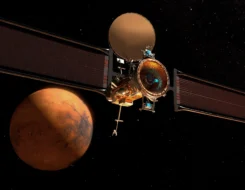
NASA Taps Blue Origin for Mars Communications Network
NASA selected Blue Origin to develop NASA’s Mars Telecommunications Network, a next-gen comms system for the Red Planet.
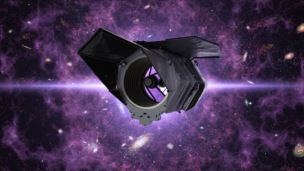
Roman Space Telescope Begins Its Journey to L2
The Nancy Grace Roman Space Telescope launched at 7:26 am ET on Sunday from KSC aboard a SpaceX Falcon Heavy rocket, starting its journey to Lagrange Point 2 and beginning a lengthy commissioning period.

Space Weather Losses to Double by 2035, Report Finds
A new report from Mission Space estimates that solar storms will cost $20.65B in 2026, rocketing to $44.27B by 2035.

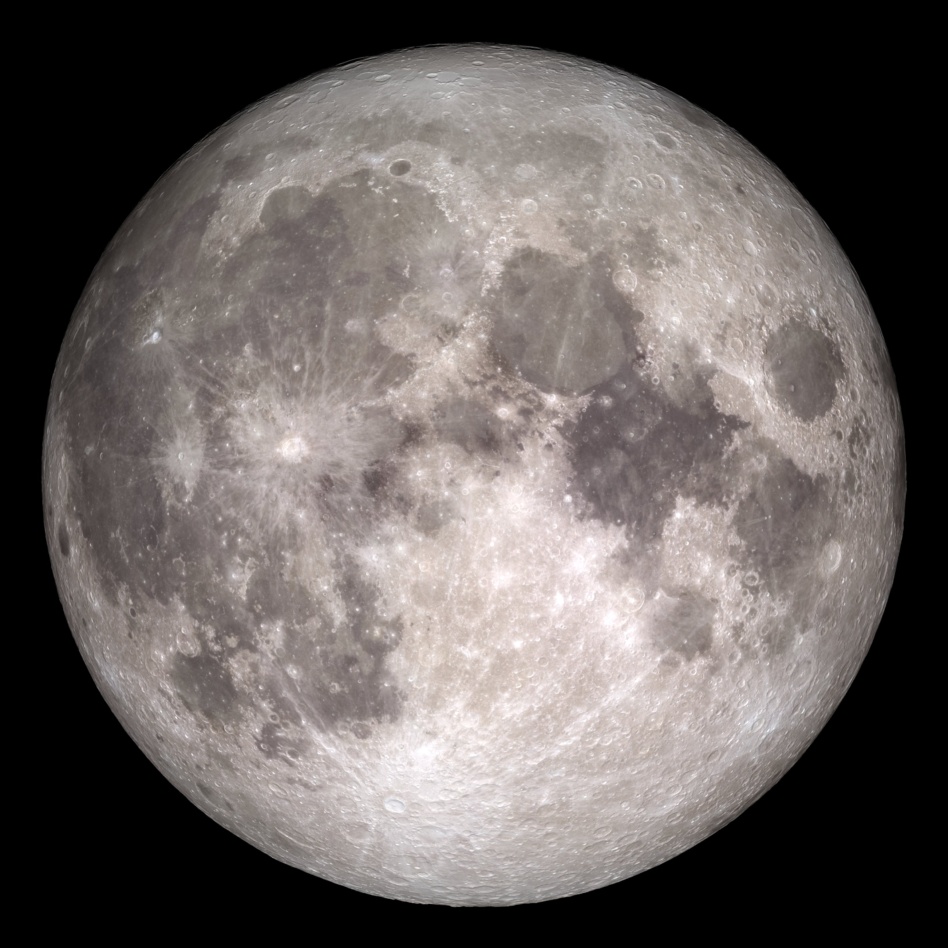
For All Moonkind, a nonprofit dedicated to protecting the moon landing sites, has launched the Institute on Space Law and Ethics to develop guidelines for responsible behavior in space.
The nitty-gritty: The institute will include a leadership board that will meet monthly as well as a group of fellows who will work on the project for two years outside of their normal job or school requirements, Michelle Hanlon, the founder of the nonprofit, told Payload. Their goal will be to draft a series of white papers that can consider ethical issues in space as quickly as the commercial sector is making advances, which often outpaces regulating bodies.
“I’m here at the UN. I love COPUOS,” she said from Vienna. “But they’re not going to produce the law in the time that we need it.”
Keep reading