


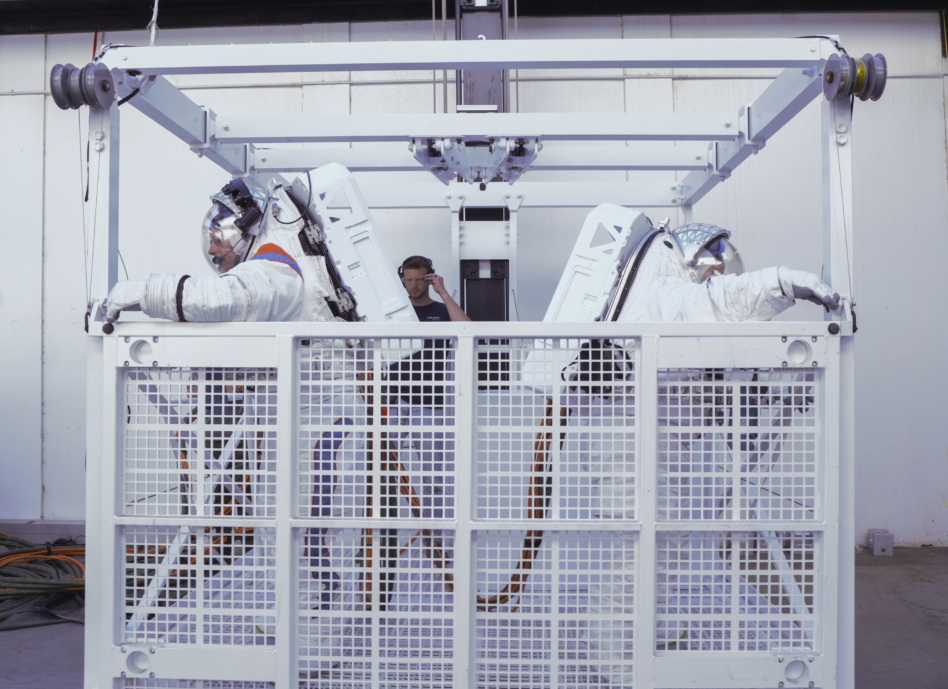
To make Artemis cheaper than Apollo, the plan is to use off-the-shelf tech, or close to it. That’s why NASA is paying Nokia to network astronauts headed for the Moon.
Axiom, NASA’s space suit contractor, said last week that it will use Nokia’s tech as the primary comms system for AxEMU space suits that astronauts will wear during the Artemis III landing (assuming that happens on schedule.) To fund the communications upgrade, NASA added $57.5M to Axiom’s suit task order, which is now valued at $285.5M.
Thierry Klein, the president of Nokia Bell Labs, told Payload his network will be the first deployment of 4G/LTE tech in space.
Talk amongst yourselves: When NASA began work on its future Moon suits, the plan was to rely on radio and Wi-Fi for communications.
But as NASA pushed that work out to private contractors, it awarded a research contract to Nokia to explore “3G PP”—the standards underlying terrestrial mobile networks—for the Moon. Its mandate is to only worry about surface comms; the Human Landing System contractor will provide a relay back to Earth.
While radio has limited bandwidth and Wi-Fi limited range, a 4G/LTE network can deliver high bandwidth to multiple devices. Nokia has designed a “network in a box” that it will test on Intuitive Machine’s next uncrewed lunar mission, using the technology to communicate with Lunar Outpost’s rover and IM’s hopper.
That demo will inform the final design of the network that heads to space on Artemis III, Klein said. Right now, there aren’t plans for further in-space testing, given tight deadlines.
Voices in my head: The AxEMU suits will now include built-in mobile devices that astronauts will operate via a control box on the front of their suit. One challenge on the Axiom side is making sure that voices—which sound different in the pressurized atmosphere of the suit—are picked up correctly by the mics in the helmet, Axiom suit boss Russel Ralston said.
On the Nokia side, the company needs to ruggedize its components for the familiar radiation and thermal challenges of the space environment, but also ensure that network management is truly autonomous and self-configuring.
“This lends itself towards a future Artemis architecture on the surface where this kind of technology can be applied on many assets—rovers, pressurized rovers, suits, ground stations,” Ralston says. “The intent is this will become the cornerstone of a larger communication network architecture on the surface of the Moon.”
ArbaLabs Launches AI Verification Demo On South Korea’s Nuri Rocket
“In short, tons of companies are looking at the latest and greatest physical AI deployments,” ArbaLabs CEO Ashley Reeves told Payload. “Nobody is really thinking about putting some checks and balances on what these AI models are doing.”
HawkEye 360 Turns its RF-Sensors to Orbital Targets
The DoD wants to better understand what’s going on in orbit. HawkEye 360 ($HAWK) has the inside scoop.
Transporter-18 Tests the Building Blocks of Orbital Data Centers
Few rideshares come with a theme, but SpaceX’s Transporter-18 had one: getting power to compute in orbit.
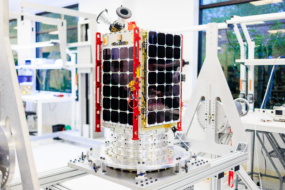
Star Catcher’s Orbital Power-Beaming Demo is Ready for Launch
Star Catcher announced today that its prototype power node is prepped and ready for launch NET Oct. 1.
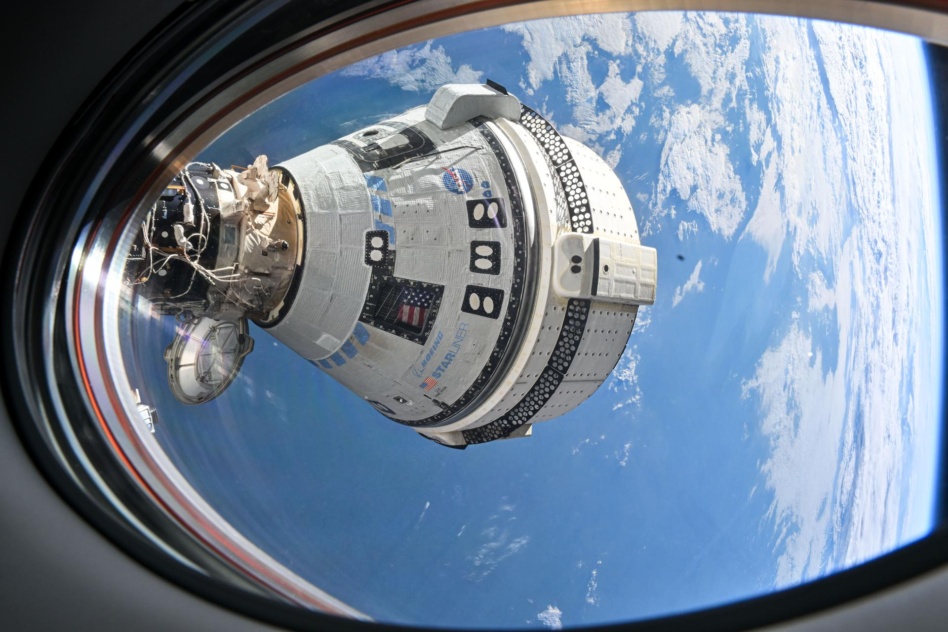
After months of analysis, NASA officials decided that the two astronauts who piloted the Boeing Starliner on a test flight to the ISS will return on a SpaceX Crew Dragon.
“It was just too much risk to the crew,” NASA commercial crew program manager Steve Stich said in a press conference following an agency-level flight readiness review. Engineers were focused on issues with Starliner’s thrusters, which they could not understand well enough to give them confidence for a crewed return.
Representatives at the agency review were unanimous in their decision to have Starliner return autonomously in early September, NASA associate administrator Ken Bowersox said. Astronauts Suni Williams and Butch Wilmore will return to Earth aboard the Crew-9 Dragon, expected to launch to the ISS the same month, and return in February.
Keep reading