


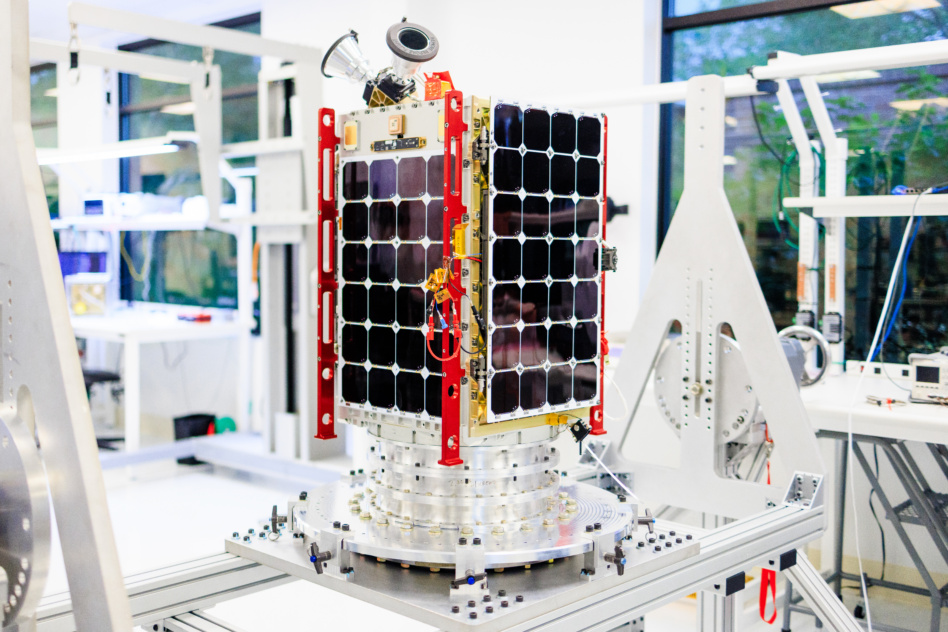
Last fall, Star Catcher beamed power down a runway in Florida. Now, the company wants to try the same thing between two spacecraft moving at roughly 27,000 km/h.
The company announced today that its prototype power node—dubbed Protostar—is prepped for SpaceX’s Transporter-18 launch, launching NET Oct. 1.
Protostar will attempt to beam power between two untethered spacecraft for the first time—a critical step to scale Star Catcher’s orbital energy-infrastructure ambitions. The team aims to get an operational grid in orbit by the end of the decade.
“This is our first time sending a prototype of our full core tech stack into space—testing this on orbit is success in and of itself,” Star Catcher cofounder and CEO Andrew Rush told Payload via email.
Meet Protostar: Protostar will be the first end-to-end in-space demo of the company’s core tech stack: energy harvesting, satellite acquisition and tracking, and power transmission.
- During the mission, Protostar will deploy and track a cubesat, beaming measurable power to its off-the-shelf solar panels. The company claims customer satellites can generate two to ten times more power with no hardware retrofit.
- If successful, the test will validate commercial power-beaming operations.
The team has already started development on Protostar’s successor—which includes a pilot power plant to beam operational levels of orbital power.
Fast track: Protostar came together on an accelerated timeline thanks to data from previous tests:
- Last November, Star Catcher delivered more than 1.1 kW to terrestrial commercial solar panels at KSC, reportedly beating a DARPA record for optical power-beaming.
- In late 2025, Star Catcher’s Sextant Alpha mission successfully demoed the company’s spacecraft acquisition and tracking software on-orbit.
Plugged in: The company isn’t just laser-focused on tech. It’s also lining up the deals needed to power its own operations.
Star Catcher’s recent deals include:
- $60M Space Force STRATFI award,
- $88M in venture capital, including a May $65M Series A,
- 10 publicly announced power-purchase agreements with commercial space players such as Starcloud, Loft Orbital, Astro Digital, and Aethero. Rush described the agreements as modeled after terrestrial grids, requiring a deposit to lock in a rate for a predetermined period.
The Pentagon also wants in on the power-beaming fun. DIU put out a call in July for power-beaming prototypes—targeting an operational space-to-space and space-to-ground capability by FY30—and the DoD’s Operational Energy Capability Improvement Fund tapped Katalyst last week for its own on-orbit demo.

RATLOG Wants to Cut ~90% of a Rocket Engine’s Parts
The heavy-lift rocket startup debuted on Y Combinator as part of the Fall 2026 batch.

Seraphim Space Investment Trust Doubled its Value in 2026
Seraphim’s major holdings—ICEYE, ALL.SPACE, D-Orbit, HawkEye 360, and Xona Space Systems, which together represent more than 75% of the firm’s portfolio—all had a great year, and that success has trickled upwards.
BlackSky Renews HEO Deal, Adds Gen-3 Imagery for Space Domain Awareness
BlackSky Technology inked a seven-figure deal to extend its partnership with Australian non-Earth imaging (NEI) provider HEO for another year.
Exclusive: In Orbit Aerospace Pivots From Re-entry Vehicles to Spacecraft Autonomy
In Orbit has won new government contracts for its onboard AI system, which the company says can run a spacecraft’s operations without waiting on ground control.

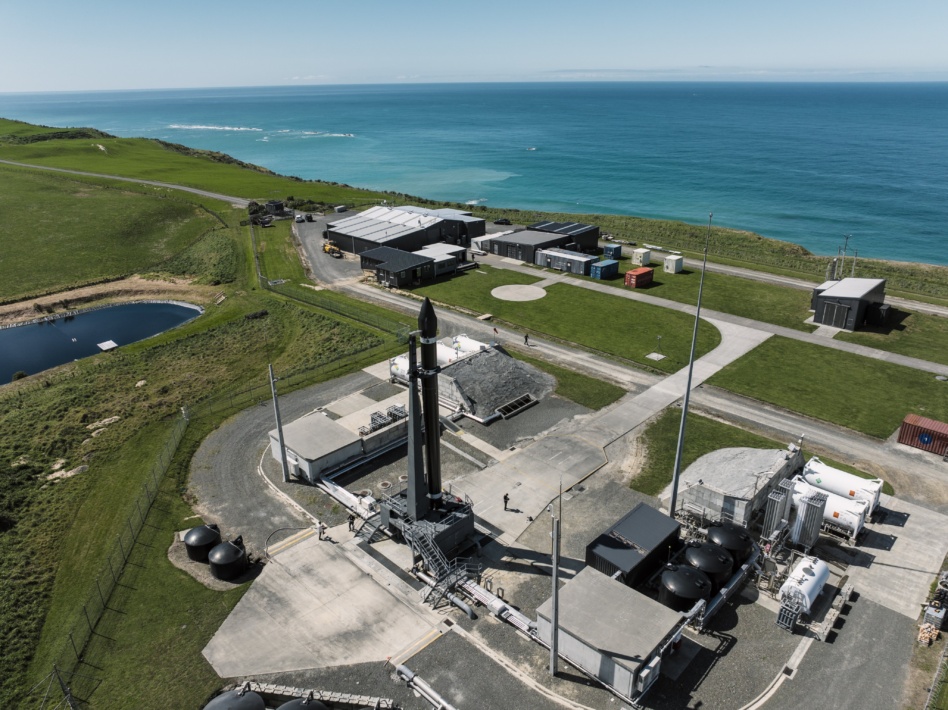
HOUSTON, TX — Iridium ($IRDM) shareholders voted overwhelmingly yesterday to approve the company’s proposed acquisition by Rocket Lab ($RKLB). According to Rocket Lab CFO Adam Spice, there’s more M&A on the horizon.
In the shareholders meeting, 99.6% of votes were cast in favor of the buyout, putting Rocket Lab one step closer to owning the satcom giant. The deal is expected to close in mid-2027 for ~$54 per Iridium share—in a mix of cash and RKLB stock.
Gotta have it: The Iridium purchase is the latest in a string of increasingly large buyouts that started before the company went public via SPAC in 2021. The acquisitions have given Rocket Lab a breadth of new capabilities, including flight software, satellite separation systems, space solar power products, electro-optical and infrared sensors, laser communications terminals, and in-space robotics systems. And the company isn’t done buying just yet.
Keep reading