



When Congress passed the One Big Beautiful Bill Act last year, spaceports got one step closer to being recognized as any other piece of infrastructure—like an airport or seaport.
Fighting for spaceport’s inclusion in that legislation is one of the top wins during the US Chamber of Commerce’s Space Leadership Council’s first year, according to John Neal, the chamber’s executive director for space policy. The bill included a tweak to the tax code that allowed spaceports to use municipal bonds to modernize—a funding tool that’s long been available to other transportation infrastructure.
But that’s just the beginning for the council, which is gearing up to push even harder on the space infrastructure front in its second year.
“How do we encourage the government to take the necessary actions to modernize our space infrastructure? That includes physical, policy and regulatory,” Neal said. “I think it will be tough for industry to grow and mature, if we don’t have that.”
Reasons to celebrate: Neal shared a list of the council’s biggest achievements to date, including:
- Working with Sen. Ted Cruz’s (R-TX) office to add $10B to NASA’s budget in the reconciliation bill.
- Supporting acquisition reform, especially priorities—such as working with at least two contractors on programs—to boost competition in the industrial base.
- Raising concerns about parts of the first EU Space Act draft, which the council viewed as anticompetitive towards America.
Just getting started: The council has a long to-do list for 2026—which Neal said is centered around “execution and implementation,” including:
- Making recommendations to the FCC on its effort to streamline licensing processes for industry.
- Engaging with the administration on the which agencies regulate different parts of the space industry.
- Pushing the State Department to act on ITAR reform, to allow US industry to compete globally.
“Our companies are put at a disadvantage,” Neal said. “State issued a rulemaking on ITAR in fall of 2024, and it’s been crickets. We’re hoping to get help from Congress to maybe prod State to at least meet with industry…We don’t know why it’s been held up as long as it has, but it’s an area of frustration—and an area where we hope we can make some progress this year.”
Big picture: Beyond specific priorities, Neal said he wants the chamber to be the place where executives from different sectors can mix with the space industry—and a convener for banking and VC officials to share their perspectives with space policy makers in DC.
“My holy grail has been to get this audience from other parts of the economy, that can generate value from space,” he said.

Intel Authorization Act Proposes Limiting Commercial EO Access
EO data is a privilege, not a right, and the US government wants to control what EO satellite operators can and can’t share with the public.
The UK Scraps the Department in Charge of UKSA
As the UK touted its aerospace achievements at the Farnborough Air Show, new Prime Minister Andy Burnham saw the perfect opportunity to scrap the department responsible.
TraCSS Looms Large Over Mission Authorization Hearing
A hearing to review the Office of Space Commerce’s (OSC’s) proposed framework for novel mission authorization became a referendum on whether the office can afford to run it.
NatSec Space Policy Nominees Face Questions from Senators
The Pentagon’s nominee to lead space acquisition said the military’s legacy space programs weren’t built for the modern acquisition reforms now reshaping the Space Force.

This content is restricted to subscribers
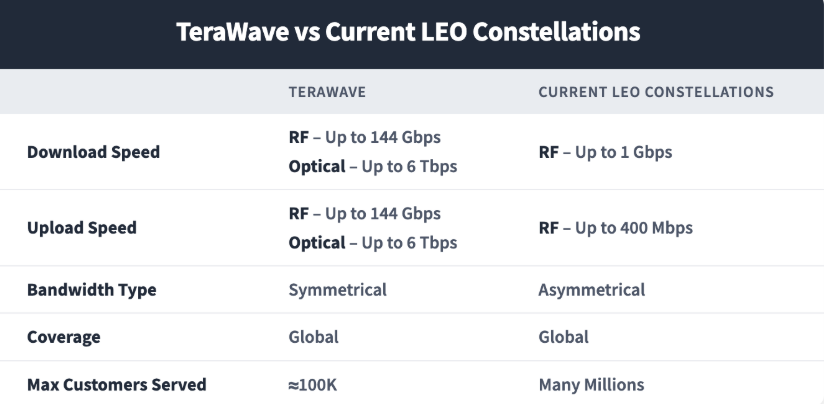
The post Blue Origin’s TeraWave Angle, Economics, and the Starlink / Amazon Leo Comparison appeared first on Payload Pro.
Keep reading