


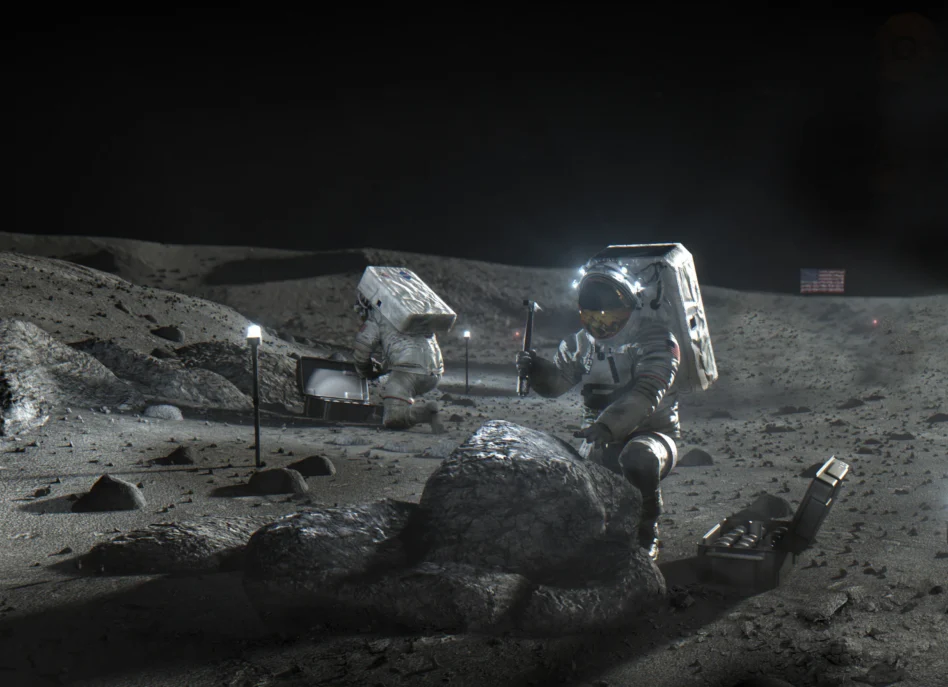
The human body has evolved to withstand many environments, but the Moon isn’t one of them.
NASA’s Human Research Program (HRP) is asking researchers what they want to know as the agency transitions from short-term lunar missions to long-term stays at a Moon Base. The RFI asks researchers to submit questions and ideas to guide the agency’s research planning, and reduce risks to astronauts during lunar and Mars exploration missions.
“We know a lot from work on the International Space Station, but exploration on the Moon will happen at a different scale and with different parameters, and we’re looking forward to exploring those differences,” Michael Stenger, the chief scientist of NASA’s HRP, told Payload via email.
A permanent base would let researchers study how a partial-gravity environment impacts astronaut health over long stretches of time. According to Stenger, it may even have opportunities for a dedicated laboratory on the lunar surface.
What could go wrong: Over the history of crewed spaceflight, NASA has identified five hazards for astronauts:
- Space radiation;
- Isolation and confinement;
- Distance from Earth;
- Gravity fields;
- Hostile/closed environments.
“Living and working on the lunar surface for extended periods will help us to understand how the human body adapts to aspects of living on another celestial body, such as reduced gravity and an elevated radiation environment,” Stenger said.
Each of these hazards comes with its own series of human health risks—reading like a list of ways the body quietly falls apart:
- Awakening inactive viruses inside bodies;
- Radiation-induced cancers;
- Decompression sickness;
- Altered structure of the eyes and brain;
- Spaceflight-induced bone changes.
Lunar limits: Long-duration LEO missions of up to 437 days—and their impact on human health—have been studied extensively on the ISS and other space stations. But there is little data available in lunar realms, where all visitors to the Moon have spent ~80 hours cumulatively on the surface. And until a cislunar ambulance startup takes off, astronauts on the lunar surface won’t be able to quickly return home.
Artemis II provided a glimpse into some of the research that NASA may conduct in future missions:
- ARCHeR measured the crew’s well-being, activity, sleep patterns, and interactions to understand space hazards on well-being and performance.
- Immune Biomarkers examined how deep space might change crews’ physiology—such as the immune system—and investigate how dormant viruses reawaken in space.
“The agency is committed to studying how extended stays on the Moon influence physical and mental health, how systems provide effective remote medical care and adequate exercise on the Moon, and a multitude of other questions,” Stenger said.
JAXA Taps ArkEdge for Two Lunar Navigation Demos
Today’s Moon explorers won’t have the luxury of GPS-like tech for navigation. But JAXA is trying to change that for future lunar visitors.

DOE Announces $400M for Frontier Science Research
The Department of Energy is super-charging research into bleeding edge energy tech.
Vast Announces New Lunar Programs Division
Vast announced a Lunar Programs division, building on its commercial space station and satellite development work to support NASA’s Moon Base ambitions.
Exclusive: Astrolab, Interstellar Mapping Hunt Lunar Water
A new partnership between Astrolab and Interstellar Mapping is one giant leap for mapkind.

European launch companies are in for a surprise next month when they get back from holiday. While they were out, Rocket Lab ($RKLB) moved into their turf.
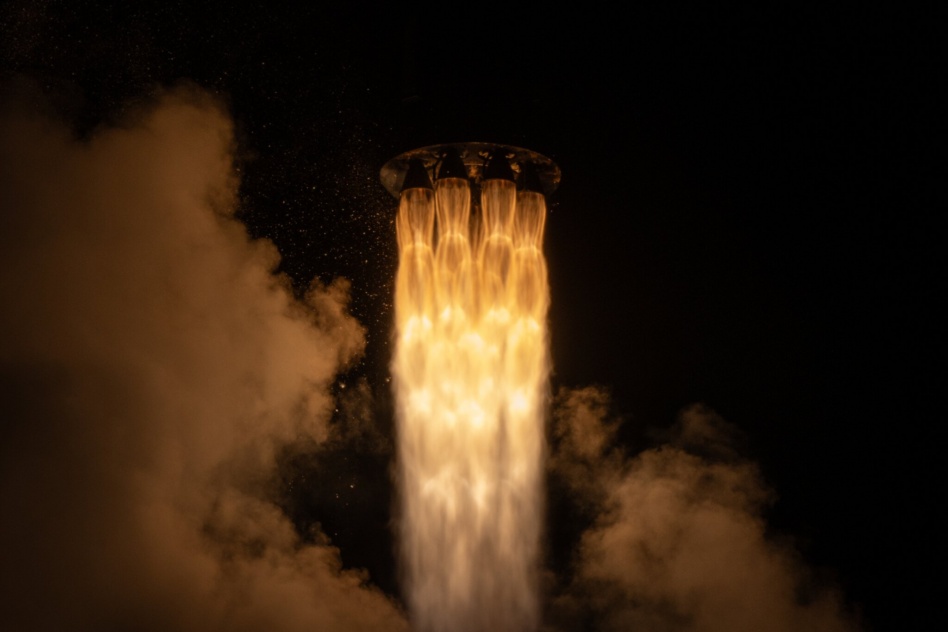
During its Q2 earnings call this week, Rocket Lab unveiled the establishment of a new German subsidiary—Rocket Lab Germany GmbH—which is “intended to not only enable scaled domestic production of satellites and their critical components, but also [deliver] launch services on Electron and Neutron,” according to the announcement.
Soft launch: The news comes as at least a dozen companies in Europe attempt to debut new launch vehicles before the end of the decade. The shared goal of these efforts is twofold:
Keep reading