

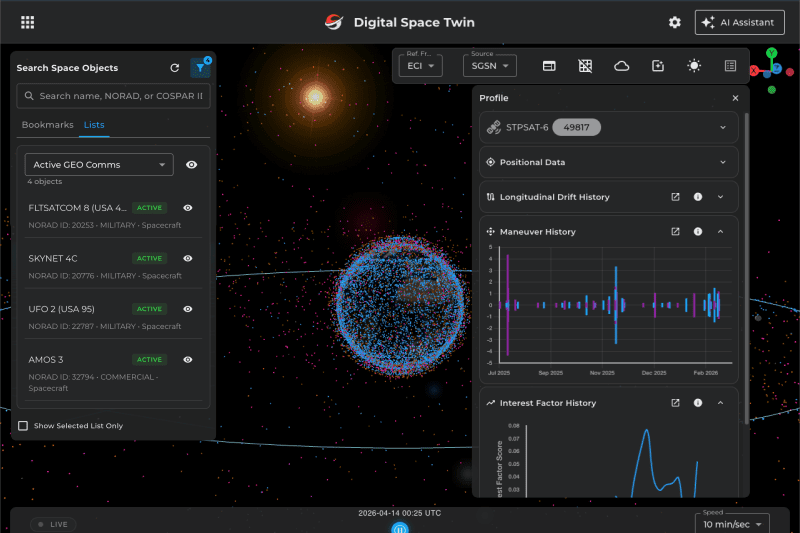
More than 16,600 spacecraft are operating in orbit, according to Slingshot Aerospace. Today, the company announced it is adding new capabilities to its Portal platform to help operators better monitor that crowded environment—and avoid another worst-case collision scenario.
Uptake: Slingshot announced that Portal was open for business in April, enabling customers to sign up for the AI-powered one-stop-shop for data and analytics to understand and operate in LEO as it becomes increasingly congested.
In just four months, Portal’s customer base has grown to 630+ users, representing 330 industry and government organizations in 19 countries. Those customers have been able to monitor their assets in orbit, spot anomalies, and detect potential collisions in a single platform.
What’s new: Slingshot is now adding a few new features to Portal, including allowing users to:
- Determine what to do, and how to maneuver, in the face of a collision risk using Slingshot’s TALOS AI.
- Request extremely precise tracking data on specific objects, including determining if Slingshot’s sensor network needs to collect missing data on a particular spacecraft of interest.
- Receive on-demand processing and analytics through Portal Marketplace.
Zoom out: While Slingshot is perhaps still best known for its news blasts tracking adversarial space objects, AI is becoming a “center of gravity” for the company, according to Robin Dickey, the director of policy and government affairs at Slingshot.
“A lot of space operators understand, there’s such an exponential increase in the amount of space objects and the amount of data that’s being collected…that, without AI, we’re never going to be able to process and deconflict and make decisions fast enough for the real world,” she told Payload on the sidelines of the Space and Missile Defense Symposium last week in Huntsville, AL.

UKSA Taps ClearSpace for Country’s First Debris Removal Mission
The UK Space Agency is dressing up as a waste-management company for Halloween.
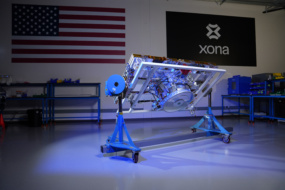
Exclusive: Xona Ramps Up Production Ahead of Pulsar Launch
With FCC approval in hand and six sats ready for the pad, Xona is turning to its next challenge: building the next 250.
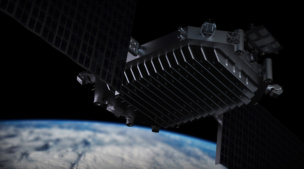
TrustPoint Taps EnduroSat to Build 40-sat GNSS Constellation
EnduroSat will build a 40-sat constellation for TrustPoint, the startup building a commercial GNSS service, the companies announced today.

Astroscale Selects Isar to Launch Debris Removal Mission
Astroscale Japan selected Germany’s Isar Aerospace to launch its ADRAS-J2 mission to capture and remove a piece of large orbital debris.

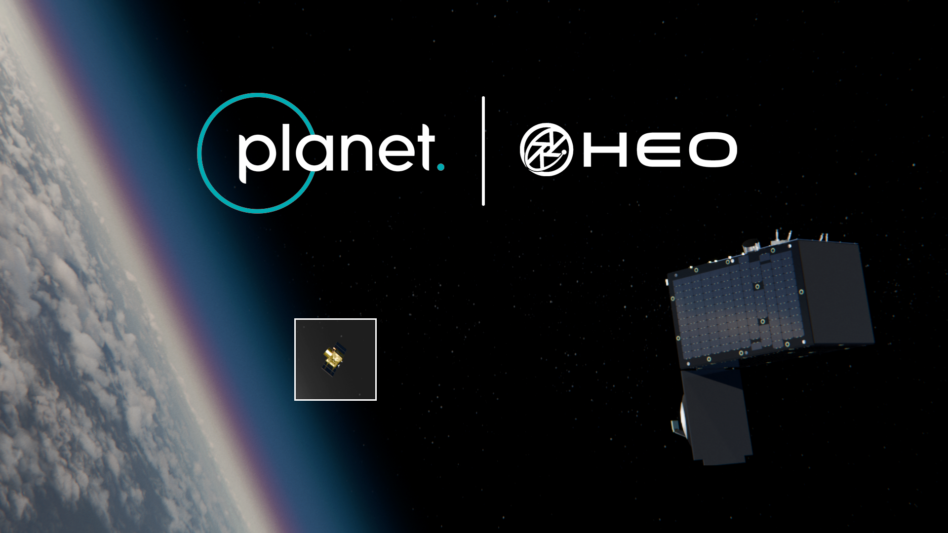
HEO and Planet Labs ($PL) announced a partnership Monday to integrate Planet’s SkySat constellation into HEO’s non-Earth imaging (NEI) sensor network.
The deal expands HEO’s NEI network to 50+ in-space sensors, allowing customers to capture more frequent, high-resolution images of objects on orbit—from a wider range of angles.
Eyes in the sky: As orbital freeways get more crowded, government and commercial satellite operators are increasingly turning to NEI capabilities—to gather insights on the health of their own satellites, and to spot potentially nefarious activities in space.
Keep reading