

NASA’s newest telescope faces a long trip and months of calibration, but the team hopes its first images arrive as a new year’s gift to the world.
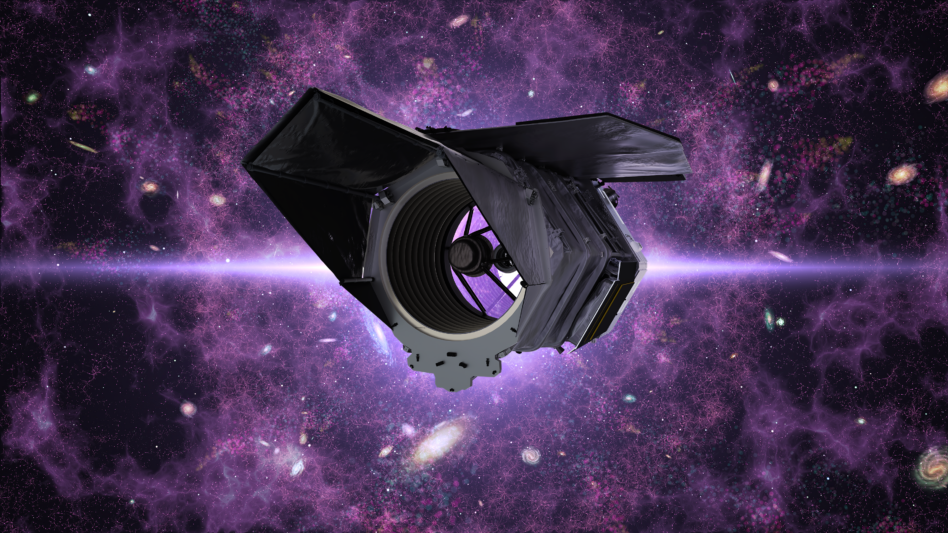
The Nancy Grace Roman Space Telescope launched at 7:26 am ET on Sunday from KSC aboard a SpaceX Falcon Heavy rocket, starting its journey to Lagrange Point 2 and beginning a lengthy commissioning period.
The flagship mission will help astronomers explore dark matter, dark energy, and exoplanets while supporting a broad range of supplemental research. Roman’s field of view is at least 100 times larger than Hubble’s—enough to measure light from a billion galaxies over its lifetime.
“Ever since humans first looked at the stars, we’ve been wondering, ‘What’s our place in the universe?’” NASA Roman Operations Manager Morgan Van Arsdall told Payload prior to the launch. “Exploring and asking questions and driving that curiosity that all humans have is what is so critically important about all of these great missions.”
They see me: Roman launched about nine months ahead of the May 2027 readiness date NASA committed to after its pandemic-era replan. Yet that launch was never guaranteed. The program survived four separate White House attempts to slash or cancel its funding across both Trump administrations, with Congress protecting it each time.
Van Arsdall credits the timely launch to limited fundamental changes since the program’s 2010 concept approval, along with the determination of the team.
“I think the whole team kind of understands the responsibility that we have towards the public for keeping everything just as efficient and effective as we can,” said Van Arsdall.
Dark arts: Once operational, the telescope will probe the universe’s invisible forces, including:
- Sweeping hundreds of millions of galaxies to test dark energy theories;
- Mapping dark matter’s structure and distribution across space and time;
- Monitoring hundreds of millions of stars, using microlensing to find and photograph exoplanets.
“From the science point of view, a year from now, our understanding of the structure of the universe is going to be completely different than it is right now,” said Van Arsdall. “To be able to completely transform how we understand the universe is pretty amazing.”
Dream team: Roman won’t seek these answers alone. Its capabilities complement those of its predecessors, Hubble and JWST.
- Roman sweeps broad swaths of sky, while Hubble and JWST are built to study individual objects in great detail.
- Roman sees primarily in the near-infrared, whereas JWST sees in the near- and mid-infrared and Hubble primarily in the ultraviolet and visible.
Mother of Hubble: A telescope that defied the odds is a fitting legacy for its namesake. Known as the “Mother of Hubble” for her role in championing that telescope’s development, Nancy Grace Roman broke barriers at a fledgling NASA as its first chief of astronomy and first female executive.
“The thing that I wish people were talking more about is the woman herself,” said Van Arsdall. “She is definitely one of my personal heroes, and it’s just such a tremendous honor to be working on the telescope that is going to carry forth her legacy.”
NASA Outlines the Details of Artemis III and IV Missions
NASA still wants to return US astronauts to the Moon in 2028. Today, officials shared a progress update on their efforts, as well as the finer details of the mission plans for Artemis III and IV, targeting flights in 2027 and 2028, respectively. Long story short: NASA remains confident it can meet the timeline for…
National Academies Rank Nonpolar Moon Sites
A new report from the National Academies ranks the top four non-polar sites for future crewed lunar missions.
UKSA Taps ClearSpace for Country’s First Debris Removal Mission
The UK Space Agency is dressing up as a waste-management company for Halloween.
NASA Signs Space Nuclear Pact, Says Moon Base Is Ahead of Schedule
Isaacman gave updates at the White House’s “Science: A New Golden Age Summit.”

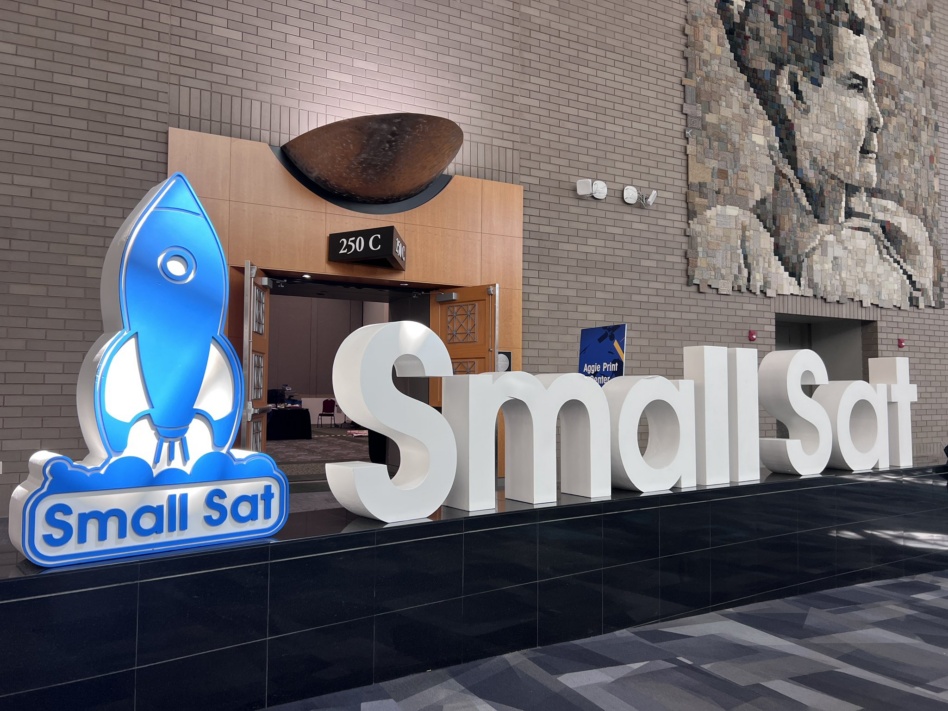
SALT LAKE CITY, UT — There was a lot to celebrate at this year’s Small Satellite Conference in Utah—new payload technologies, next-gen satellite platforms, a slew of collaborative contracts, and a more favorable funding market than any year in recent memory. So why did it feel like everyone was on edge?
Looming over all of this progress was a general understanding that unless something changes in the launch market—and soon—the space industry might be running 100mph into a brick wall—is that a tunnel ahead, or is it just painted on?
New kids on the block: As a result of growing fears that SpaceX rideshares might be going the way of the Northrop Grumman Pegasus, exhibitions operated by Exolaunch and SEOPS—two launch integrators who have purchased Falcon 9s to run their own rideshare programs—were packed to the gills.
Keep reading