



EnduroSat will build a 40-sat constellation for TrustPoint, the startup building a commercial GNSS service, the companies announced today.
The satellites will be built and delivered in three batches, with the first set to launch NET 2027. Depending on the supply chain and launch availability, TrustPoint CEO Patrick Shannon said he expects the full constellation could come online in the next 24 to 30 months.
Location, location: The award signifies TrustPoint’s graduation from testing and demonstration into full-fledged operations. The company has launched three demo satellites—two early tech-demos in 2023, and a demo of the full tech-stack in 2025.
Those initial flights allowed TrustPoint to prove out the technical capabilities of a C-band, GPS-independent PNT solution, and notch milestones such as its first real-time demonstration of a C-band GNSS signal.
While public GPS services transmit their signals over L-band frequencies because this wavelength is resistant to weather, TrustPoint’s use of the narrower-wavelength C-band allows the company to offer a better service, for a competitive price, according to Shannon.
- C-band has fewer regulatory burdens than the busier L-band spectrum, giving TrustPoint the ability to build a private GPS service without needing to enter into lengthy usage negotiations with allied, and adversarial, nations.
- C-band is also less affected by the ionosphere compared with L-band signals. While L-band’s signal tends to stay consistent in poor weather conditions, interference from the ionosphere (subject to both Earth weather and space weather) is a common cause of non-human-driven GPS errors, and solar storms can cause entire regions to lose GPS signal, according to Shannon. C-band has a narrower wavelength, meaning its signal is more reliable and accurate than L-band under these circumstances.
TrustPoint’s decision to operate its constellation in LEO (closer to home than public GPS sats, which fly in MEO) compounds these two benefits, as the closer-up sats provide more reliable connection to users on Earth with a tighter coverage zone, thereby making services more targeted and regulatory approvals easier to obtain.
Money matters: TrustPoint’s early satellite demos proved more than just the technical capabilities of its planned service, however. They also proved that TrustPoint could build a constellation for an affordable price, Shannon said.
When it comes to competing with free public GPS, building a service for rock-bottom cost is vital. TrustPoint’s selection of C-band and LEO trajectory are the two main drivers keeping costs at a reasonable level.
Relying on C-band signals means TrustPoint can build sats that are far smaller (~10 kg each) than the multi-ton public GPS satellites in MEO. This helps TrustPoint keep production and launch costs low, while also giving the company more opportunities to fit into launch fairings.
“The business model…requires satellite costs: payload, bus, plus launch delivered on-orbit in the low six figures…we’re talking about satellites that are only a few $100,000 apiece, and we’re already seeing those economics,” Shannon told Payload. “One of our founding principles is: don’t go off and have to build a billion-dollar satellite constellation.”

Orbital Partners with Reflex Aerospace on ODC Platform
Orbital announced today it has selected German satellite manufacturer Reflex Aerospace as the exclusive platform partner for Orbital-1.

Inversion Space Wins NASA Contract to Study Aerocapture Flight
NASA announced today it awarded Inversion a contract to study a new method of interplanetary travel which uses a planetary body’s atmosphere to slow incoming spacecraft looking to enter into orbit.

Eclipse Space Unveils Three Satellite Platforms for Constellations
Eclipse Space unveiled details of its first three satellite platforms, each targeting a different in-space capability—D2D comms, broadband connectivity, and in-orbit compute.
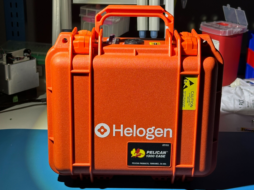
Exclusive: Helogen Plans Two In-Orbit Manufacturing Missions in October
While Helogen has flown subsystems in the past, the missions will mark the first flights of the entire HEL-IOS platform.


RF startup AnySignal formalized its partnership with bus manufacturer Apex, allowing customers to add its AnyLink network and radios to the purchase of Apex’s platforms.
“Making it clear to the customers that if they just use AnyLink and the underlying software components, a lot of things get easier,” AnySignal cofounder and CEO John Malsbury told Payload. “It just became an obvious thing to do once it was well proven.”
The companies did not disclose the value of the deal. AnySignal also sells AnyLink to other bus manufacturers.
Keep reading