



For decades, the Lockheed C-130 Hercules aircraft and variants have hauled cargo, flown as gunships, and refueled military jets midair. Now, Orbital Operations wants to do the same in space.
The Long Beach, CA, startup has won up to $35M from the DoD under a prototype Other Transaction Agreement to fly a full-scale, in-orbit demo of Astraeus—its cryogenic-maneuvering vehicle.
The company also closed a $7M seed extension led by DTX Ventures, bringing its total raised to ~$16M. GoAhead Ventures and Solaris Ventures also participated alongside follow-on investment from Initialized Capital, Harpoon Ventures, TRAC VC, and others.
“Space is now a contested environment,” Orbital Operations CEO and cofounder Ben Schleuniger told Payload. “We’re going into this new space age where there’s all these new orbits and all of these new ideas coming around…we just need more dynamic assets out there to transport things around.”
Meet Astraeus: The vehicle is designed to bring launch-vehicle-class propulsion to on-orbit operations.
- An onboard refrigeration system is designed to keep Astraeus’ liquid hydrogen and oxygen from boiling off, with the goal of keeping the vehicle on-orbit for years—much longer than the week or so that a disposable stage lasts.
- The company is aiming to be able to carry out maneuvers within single-digit hours of giving a command, well inside the 48-hour window Schleuniger said military operators want.
- After ferrying payloads to higher orbits, Astraeus is built to return to LEO to refuel.
- The same base vehicle can be fitted for logistics, tactical, or refueling missions, mirroring the C-130’s mission-dependent variants.
“In a sense, we’re looking to be that reusable third stage,” Schleuniger said, adding, “It’s very dual use, but it also unlocks just all dynamic operations out in orbit—not just range, but speed.”
Cosmic timing: Schleuniger didn’t have to look far for an example of why the Pentagon wants these capabilities. Over the past week, Russia’s Cosmos 2612 shadowed ICEYE-X36, a US-flagged radar sat widely believed to supply imagery to Ukraine. LeoLabs tracked the Russian spacecraft closing to ~500 m between Oct. 15 and 19, before it drifted away.
Still, Schleuniger said demand was already high “even before we had the incident this last week.” He pointed to SPACECOM’s list of tech priorities for 2029 to 2033, which names sustained space maneuver as one of its top needs.
Later stage: The ~13-person team went from closing its seed round to a full-pressure hot-fire in under six months. Next up are more engine hot-fires, refrigeration-cycle work, and qualification before flight.
More fundraising is likely, but the government award “is really to get us to that first flight,” Schleuniger said.

Gama Raises €15M Seed to Boost Europe’s Solar Array Supply Chain
Europe continues to stack the building blocks for a more robust space economy.

NeuralSat Raises €2.9M to Build Orbital Data Relay Network
The Autobahn is coming for in-space data traffic.
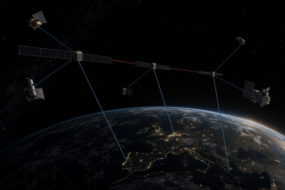
OwlO Cloud Emerges from Stealth to Build European Orbital Cloud Network
OwlO Cloud is planning to have at least 10 spacecraft—orbital cloud nodes (OCN)—operational by 2030.
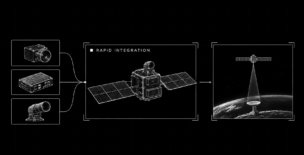
Exclusive: Lyra Systems Emerges from Stealth to Solve the Valley of Death
Lyra Systems announced an agreement with the DoD aimed at helping early-stage technologies traverse unscathed across the Valley of Death.

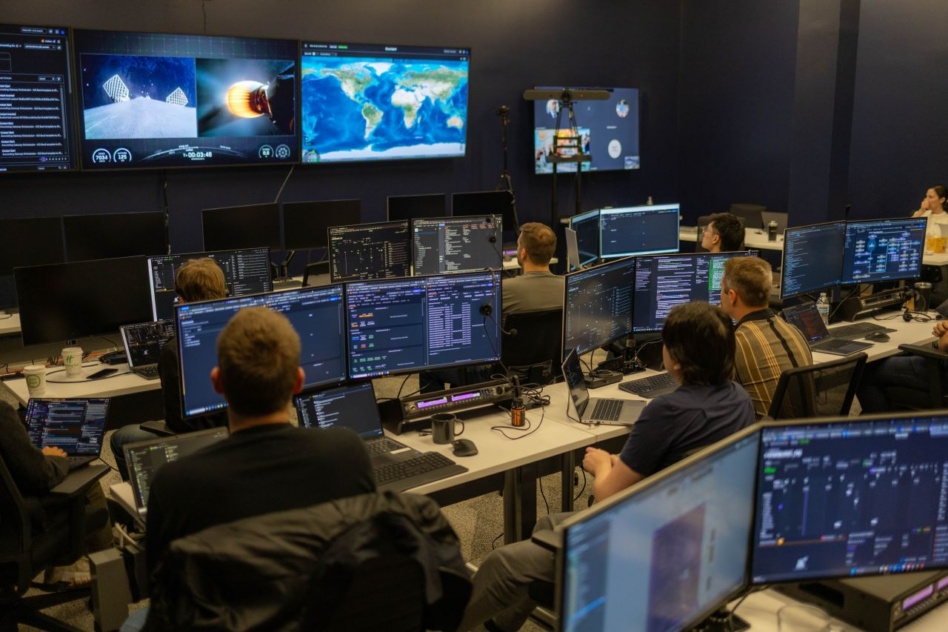
BOTHELL, WA—Portal Space Systems’ Starburst-1 spacecraft has been in orbit for just a couple days, and CEO Jeff Thornburg is already ready to declare the mission a success.
The spacecraft launched on Tuesday aboard SpaceX’s Bandwagon-5 rideshare mission. After launch, Starburst separated from the rocket, began communicating with the ground, and unfurled its solar arrays to charge up its batteries. That’s the moment Thornburg said he and the 60+ person Portal team could relax—at least a little bit.
“The relief came in stages,” he said. “The last big one came a couple hours after [launch] when we found the spacecraft. It was where we thought it was, it was communicating, and then it was like, ‘Oh my gosh, this has happened.’”
Keep reading