


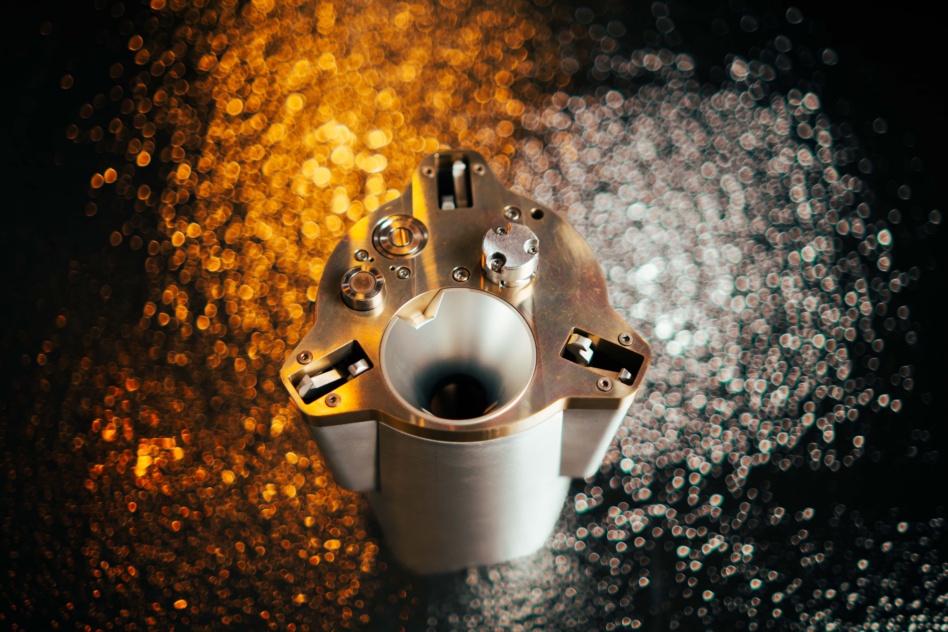
Spaceium’s goal is to launch gas stations into orbit. The first step? Making sure spacecraft builders have access to the pump.
Today, the company is opening up access to its OpenPort refueling tech, allowing any company to build and license the hardware for $1—a low price because Spaceium plans to make its money by selling fuel to spacecraft.
“We are not a port business,” Spaceium cofounder and CEO Ashi Dissanayake told Payload. “We are not here to sell a refueling interface and make money. We want to develop this whole space economy so that any spacecraft can get filled.”
Gas up: When a satellite runs out of fuel in orbit, its useful life is over. Many compare that business model to throwing out a car every time the gas light comes on.
Companies such as Spaceium are hoping to change that calculation. Being able to refuel satellites can allow for:
- Operating as long as a satellite’s electronics and other systems still work;
- Maneuvering without worrying about conserving fuel;
- Travelling farther into deep space, without needing to carry all of its fuel at launch.
The specs: Fuel can flow both ways through the androgynous OpenPort, meaning it can act as both fuel pump and refueling port rather than having one distinct part to serve each function. This is the key to unlocking a network of refuelers, since traveling fuel depots can fuel up with Spaceium—and then refuel spacecraft themselves.
“It was a request from a customer,” Reza Fetanat, cofounder and CTO, said. “We got all of the requirements from customers, and that was something they wanted.”
The port, which is fuel-agnostic, also doesn’t add a new piece onto spacecraft—it replaces the port that’s traditionally used to fuel up the spacecraft for the first time on the ground, giving longer-term purpose to a part that typically becomes useless weight after launch.
Eyes on the competition: Orbit Fab, which is also hoping to become the gas station of choice in orbit, has its own RAFTI refueling port, which it made available to industry via an open license in October 2021.
What’s next: Spaceium already has some flight heritage, launching a mission in November aboard SpaceX’s Transporter-15 that tested the Spaceium-built robotic arm that will assist in the refueling process on the company’s future depots.
Next up—Spaceium will send OpenPort to the ISS in the first half of 2027. There, the hardware will demo xenon transfer on a spacecraft docked outside the ISS.
Exclusive: Orbital Taps Orca Aerospace for Onboard Autonomy Software
Satellite autonomy startup Orca Aerospace announced a deal worth up to $20M with LA-based Orbital to put its software on Orbital’s planned data-center fleet.
Orbital Matter, EnduroSat Announce an In-Space Manufacturing Mission in 2028
Orbital Matter announced it would partner with EnduroSat for mission in 2028 to deploy a 5 kW solar array with its 3D printing capabilities.
Starfish Loses Contact with Otter, Cutting SSPICY Short
Starfish’s Otter spacecraft has joined the graveyard it was sent to inspect.
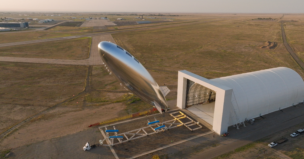
Exclusive: Sceye Signs Deal to Fly HAPS Fleet for SoftBank
Sceye signed a five-year, master-services agreement with SoftBank to manufacture, launch, and operate a fleet of Sceye’s high-altitude platform systems (HAPS) over Japan.


The Autobahn is coming for in-space data traffic.
German startup NeuralSat announced a €2.9M ($3.2M) pre-seed funding round today to develop a 72-sat in-space data relay and processing network, aimed at speeding up the flow of data to and from space.
Capnamic Ventures and Bayern Kapital led the round, which included additional participation from ZOHO.VC, Robin Capital, KIEMIS Holding, and Mission E Capital. NeuralSat is also a member of ESA’s Business Incubation Center (ESA BIC) and the NVIDIA Inception Program.
Keep reading