


Europe continues to stack the building blocks for a more robust space economy.
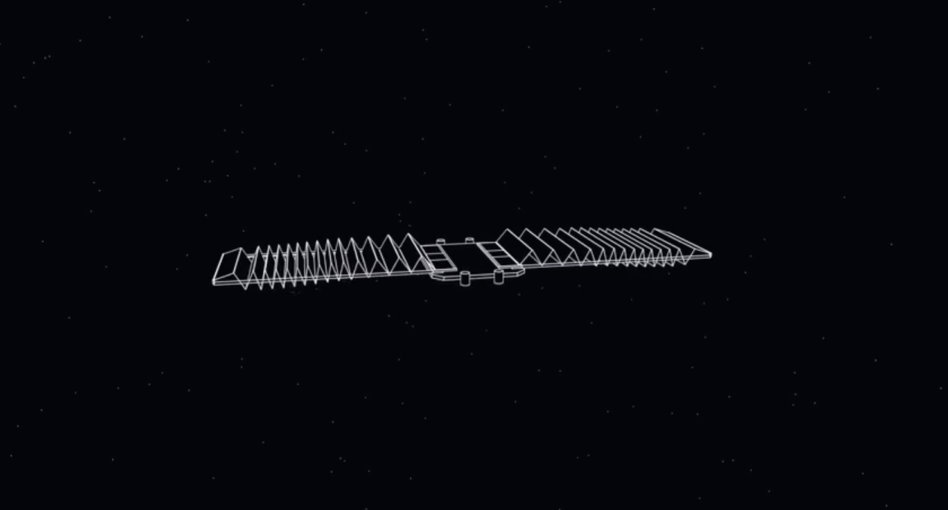
Gama, a French startup developing ultra-light deployable solar arrays, announced a €15M seed round yesterday to boost Europe’s solar array supply chain.
The round included funds from a mix of European and US VCs, including Transition Ventures, Planet A, Draper Associates, and Manta Ray.
- The funds will be used to develop a high-volume production facility outside of Paris, France, which will be capable of producing 100 MW of solar arrays annually.
- The first units—called Wings—are expected to start rolling off the line next year.
- Gama also plans to hire ~60 employees in engineering roles across mechanical, electrical, and software.
The tech: Gama was initially founded to develop solar-sail technology—which uses the Sun’s energy to propel spacecraft into deep space—but the company quickly transitioned into developing solar arrays to solve the ever-present supply-chain headache for other satellite operators.
Nearly every spacecraft in orbit relies on solar panels to power its payloads, but solar cells are built by a small number of providers and can often come with lead times as high as a year or more, according to CEO Andrew Nutter.
Additionally, as power needs increase, the size of the solar arrays required to run each satellite grows larger, causing them to become floppy—and less effective at gathering sunlight. While traditional solutions involve adding weight to increase rigidity, Gama’s solution uses software—uploaded into customer flight computers—to help point the solar arrays at the Sun, and to solve the floppy-disk problem without additional mass.
“Our approach is to make [solar arrays] as thin and light as possible, so you can have more surface area, and you reduce the cost and the mass. Then, as you get to bigger surface areas, transfer some of that complexity—and the requirements for stability—into the software side,” Nutter said.
Gama is targeting $10 per watt on its solar arrays, and will deliver its first demonstration Wing in the middle of next year.
Shining light: Gama’s fundraise represents one of the largest seed rounds for a European space startup in recent years. It’s a signal that European VCs are growing increasingly comfortable making big bets on the future of the region’s space ecosystem. But it’s also reflective of the demand Gama has seen—and expects to continue seeing—as Europe scales its footprint in orbit.
In September, Gama signed a partnership with US satellite builder Eclipse Space to supply deployable solar arrays for Eclipse’s satellite platforms. For future customers, Gama has its eye on the growing pool of satellite-bus manufacturers across the continent.
“We needed funding because there was demand or volume, and so we needed the factory quite quickly,” Nutter said. “The vision is very simple: If we can consolidate the volume from multiple satellite-bus manufacturers, we can give the industry cheaper prices.”

NeuralSat Raises €2.9M to Build Orbital Data Relay Network
The Autobahn is coming for in-space data traffic.
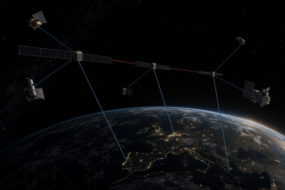
OwlO Cloud Emerges from Stealth to Build European Orbital Cloud Network
OwlO Cloud is planning to have at least 10 spacecraft—orbital cloud nodes (OCN)—operational by 2030.
Exclusive: Lyra Systems Emerges from Stealth to Solve the Valley of Death
Lyra Systems announced an agreement with the DoD aimed at helping early-stage technologies traverse unscathed across the Valley of Death.
European Bodyguard Sats are Closer Than You Think
PAVE Space announced plans to launch a demo mission of its IBEX spacecraft—a highly maneuverable platform for commercial and defense payloads. But PAVE isn’t the only startup building a security detail.

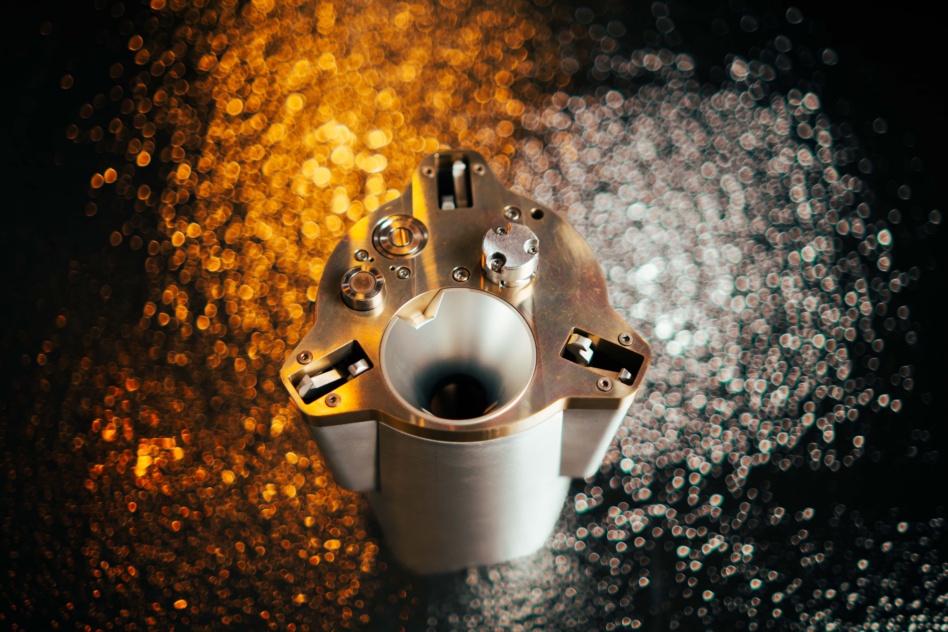
Spaceium’s goal is to launch gas stations into orbit. The first step? Making sure spacecraft builders have access to the pump.
Today, the company is opening up access to its OpenPort refueling tech, allowing any company to build and license the hardware for $1—a low price because Spaceium plans to make its money by selling fuel to spacecraft.
“We are not a port business,” Spaceium cofounder and CEO Ashi Dissanayake told Payload. “We are not here to sell a refueling interface and make money. We want to develop this whole space economy so that any spacecraft can get filled.”
Keep reading