

Kayhan Space and Morpheus Space have teamed up to offer their customers automated collision avoidance maneuvers, the two companies announced this morning.
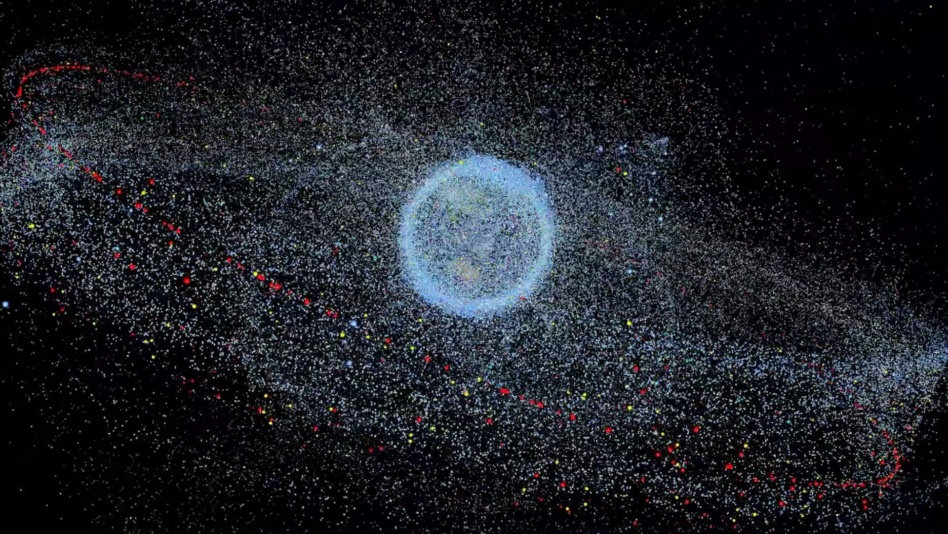
By pairing Kayhan’s space traffic management (STM) software, Pathfinder, with Morpheus’ pay-as-you-go propulsion, the companies hope they can make it simpler for satellite operators to prevent space from getting mucked up.
“We want to make sure that every satellite that launches has a feasible option to be maneuverable,” Kayhan Space CTO Araz Feyzi told Payload. “Because, you’re not going up there for three months and coming back. You are going to be in an environment where dynamics will change greatly.”
Kayhan’s piece: The STM company currently operates a collision avoidance software called Pathfinder. Customers receive conjunction notifications through the platform, and when a maneuver is needed, Pathfinder will pull together possible options and select the best ones so that all an operator has to do is choose and execute.
“The idea is…to put everything on autopilot so you can focus on whatever your core mission is,” Feyzi said.
Morpheus’ piece: The German propulsion startup offers what it calls “mobility as a service.” Customers can purchase one or more of its electric thrusters for a relatively small fee to attach to their satellites. Then, once the craft is in space, customers can use Morpheus’ platform to schedule maneuvers and pay for the fuel used with each maneuver.
A match made in heaven: The two companies are joining forces to practically automate collision avoidance maneuvering.
Feyzi says that it’ll be as easy as making one click in Morpheus’ software. Operators will receive a conjunction notification via Pathfinder, as well as potential maneuver options. Morpheus’ platform will determine how much each possible maneuver will cost. The operator can then choose a maneuver, pay for it on the platform, and send the electric thrusters a signal to fire. “That’s how easy we’re making it,” Feyzi said.
The companies are hoping that operators will take advantage of this service as an inexpensive insurance policy for satellites that may not be able to avoid collisions otherwise.
“You may not need it for years, but the moment you need it, it is there and it’s ready for you,” Feyzi said.
Looking ahead…The first mission to take advantage of this collaboration is slated to fly in Q1 2023 for an undisclosed customer.
Potomac Database Systems Unveils Plans to Amass Lunar Data
There’s money to be made on the Moon, but it’s not all mining and infrastructure.
European Space Startups Jockey for ‘Infrastructure’ Financing
Europe has a growth-stage-capital problem.
Meet Blacknight Space Labs In-Orbit Infrastructure Accelerator
Blacknight Space Labs will provide companies up to $100,000 each. In addition, accelerator companies will get startup 101 education, mentorship, assistance breaking into the defense space market—and help with everything from fundraising, to navigating the government contracting system, to finding customers.
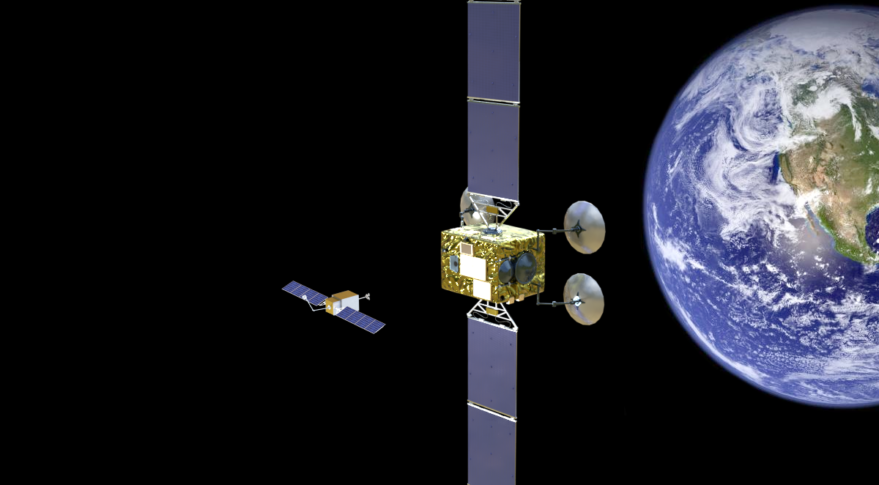
Starfish Space has revealed its plans for its first space mission in spring 2023. The mission will demonstrate the startup’s satellite docking technology through its Otter Pup spacecraft, and if successful, it will be the first ever satellite docking using electric propulsion.
Starfish 101: The Seattle-based startup has ambitions to enable an in-space economy where inexpensive, easily accessible in-orbit servicing is the norm.
“You can drive your car until the wheels literally fall off. But you can do that because you can go and take it to a mechanic if you need to, or you have a tow truck to get you out of the way in traffic,” Starfish cofounder Trevor Bennett told Payload.
Keep reading