

Argyris Kriezis
US Space Companies Make a Run at Europe
After years of investor malaise and memes about the region’s lack of innovation, investing in the EU is suddenly back in vogue.

Tracking US Mobile Satellite Service Spectrum
The MSS landscape is about to evolve rapidly as incumbents form new partnerships to ride the D2D wave while new entrants work to get access to the valuable MSS spectrum.

NGSO Fixed Satellite Service Spectrum Priority in the US: Payload Research
Last month, the Federal Communications Commission (FCC) updated its spectrum sharing rules for Non-Geostationary (NGSO) Fixed Satellite Service (FSS) systems to establish quantified interference protection criteria for satellite systems based on their level of spectrum priority.

Startups Race to Make Space-Based Power a Reality
In this article, we will review four companies pioneering space-based solar power, and their different approaches.


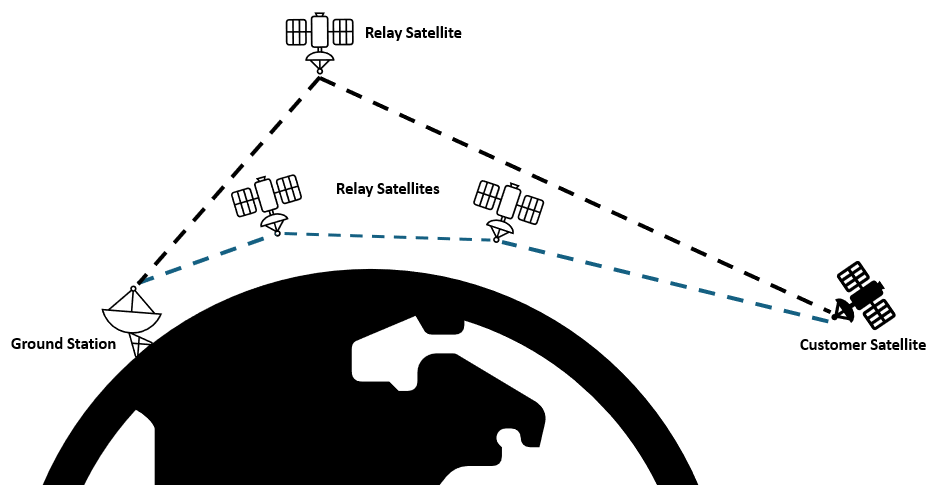
Impact of In-Space Relay Networks on Ground Station as a Service
Traditional Ground Station as a Service (GSaaS) providers will soon face competition from relay communications networks that promise faster transmitting, simplified licensing, and potentially lower cost.
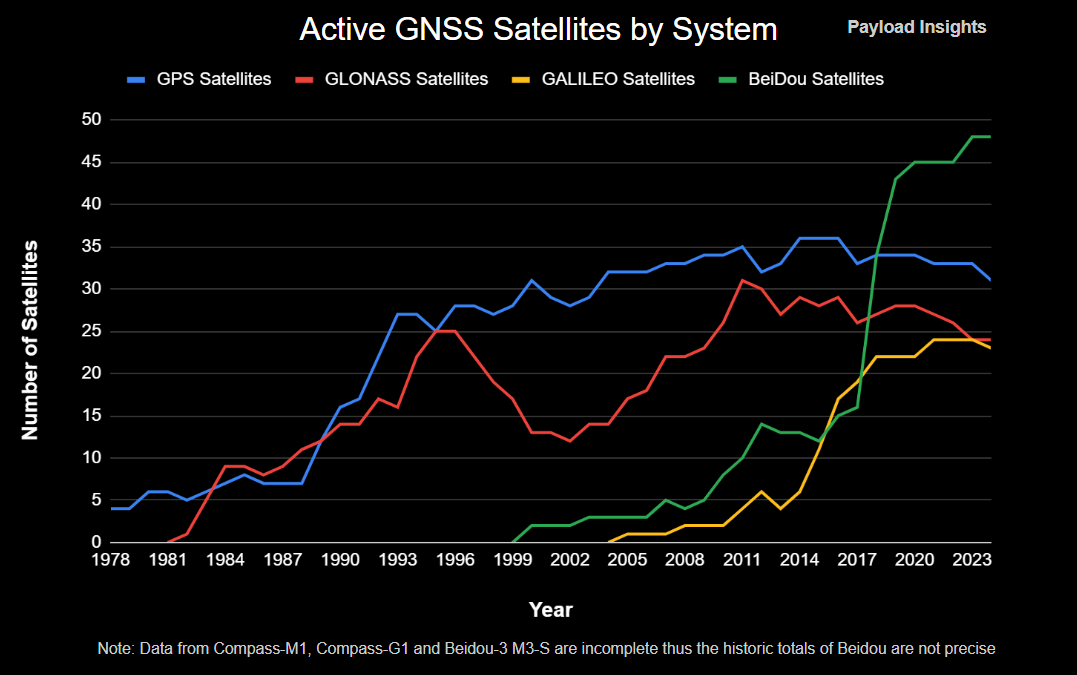
GPS Faces Growing Competition from China’s BeiDou
Since GPS became operational in 1993, the US has been far and away the leader in satellite navigation technology. But the landscape is rapidly changing, and international alternatives are catching up.
Rise and Stall of GPS: The Average Age of GPS Satellites Hits 13 Years
The Global Positioning System has long been one of the most important and widely-used services in the world but the US navigational network is showing signs of aging, slipping into a pattern of maintaining the status quo rather than driving innovation.
