



For years, European space startups have wondered when big institutional buyers would stop handing large contracts exclusively to legacy A&D primes. During the last few weeks, it’s become clear that time is now.
This month, at the International Space Summit and World Space Business Week (WSBW) in Paris, European space startups locked down several major commercial, civil, and defense contracts, suggesting a shift within the European space ecosystem—one in which startups are increasingly participating in major programs.
I.e, e.g., etc.: The new contracts signal a change in mentality among the continent’s institutional buyers, driven by both the rising focus on sovereign systems, and the newfound necessity to quickly improve commercial and national space capabilities.
ICEYE, the Finnish SAR scale-up, has been one of the major benefactors of this new reality, signing a wave of deals across the continent focused on sovereign SAR. Yesterday, ESA tapped the company to lead a European consortium to study the proposed EU Earth Observation Governmental Service.
“[ICEYE is] proving that Europe can make decisions quickly around defense and procurement,” Mark Boggett, CEO of the UK-based VC firm Seraphim Space, said during a panel at WSBW. “There are examples of European defense organizations moving quickly, and they’re rewriting the rules as they’re going along.”
But ICEYE isn’t alone in soaking up the new business, and even major companies across the continent are starting to look to the startup world to boost their capabilities.
- Aerospacelab won a €2.4B contract to build 264 satellites for the European Commission’s proposed IRIS² constellation.
- Eutelsat partnered with French ground station-as-a-service startup Skynopy to build a global ground-station network.
- The French government tapped both Airbus Defence and Space and French RF-detection startup Unseenlabs to build the country’s next signal-intelligence satellites.
- Safran partnered with French propulsion startup Exotrail to develop integrated electric-propulsion systems.
- Eutelsat OneWeb selected Germany-based OroraTech to supply at least 48 thermal-infrared payloads for its upcoming constellation.
The deals signed over the past few weeks prove that officials are acknowledging Europe’s ‘New Space’ scene can offer capabilities that legacy primes cannot.
“The amount of money that is being spent [by A&D primes] on R&D in large programs is enormous…it should be that all innovation should come from those programs, just by comparing the volume of money spent, and it’s not,” Jean-François Morizur, CEO of French optical-ground-station startup Cailabs, told Payload. “It’s a paradox that the startups are sometimes getting faster to the objective.”
Risk appetites: Officials at European space startups told Payload that new space companies getting in the mix is largely due to two factors: an increasing appetite for risk among institutional buyers, and the space-startup sector’s increasingly powerful capabilities.
“It’s a matter of maturity of the ecosystem,” Jean-Luc Maria, CEO of French propulsion and in-space servicing company Exotrail, told Payload. “We have matured, we have demonstrated…[Buyers] understand that we are not an early-stage company anymore.”
At a time when European leaders are pushing hard to build up their national and regional capabilities, and divorce their national space programs’ reliance on the US, startups often offer the quickest pathway forward. And while European startups may have far less money in the bank compared to the primes—and their counterparts across the pond—they’ve been able to deliver real capabilities.
“[It’s] the new space way of doing things—typically venture-backed, typically taking some risks,” Morizur said. “When you sell a service, what you’re selling is something that works. You’re not selling an R&D project.”
With the ink still drying on many of these contracts and partnership agreements, the next task facing Europe’s new space scene will be to deliver at scale. If they can achieve that—on time, and on budget—the trend toward trusting startups across the region may start to stick.

Fortastra Raises $30M Series A to Fund its Next Security Spacecraft
The US military has weapons in space, and—with the orbital arsenal expanding—security is becoming a top priority.
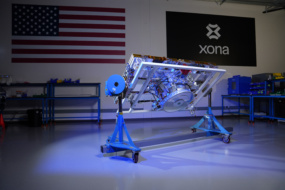
Exclusive: Xona Ramps Up Production Ahead of Pulsar Launch
With FCC approval in hand and six sats ready for the pad, Xona is turning to its next challenge: building the next 250.
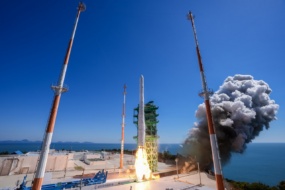
ArbaLabs Launches AI Verification Demo On South Korea’s Nuri Rocket
“In short, tons of companies are looking at the latest and greatest physical AI deployments,” ArbaLabs CEO Ashley Reeves told Payload. “Nobody is really thinking about putting some checks and balances on what these AI models are doing.”

Nebex Partners with Thrusters Unlimited to Unlock $700M for Mexico’s Space Ecosystem
The capital will fund EO, telecoms and other strategic capabilities, according to Nebex.


Campaign season is in full swing across the US. Yet this year’s hottest race might just be one that’s not on the ballot.
Ever since President Donald Trump signed an executive order on Aug. 28 establishing a US Space Academy, states have been coming out of the woodwork to make the case for why the school should call it home. The EO called for a civilian, NASA-led answer to the military services academies, and created a commission to sort out further details, such as curriculum, service requirements, and what would go into establishing the school.
Ballot access: On Sept. 10, NASA laid out initial details in an RFI, with formal proposals to potentially come later.
Keep reading