


Campaign season is in full swing across the US. Yet this year’s hottest race might just be one that’s not on the ballot.
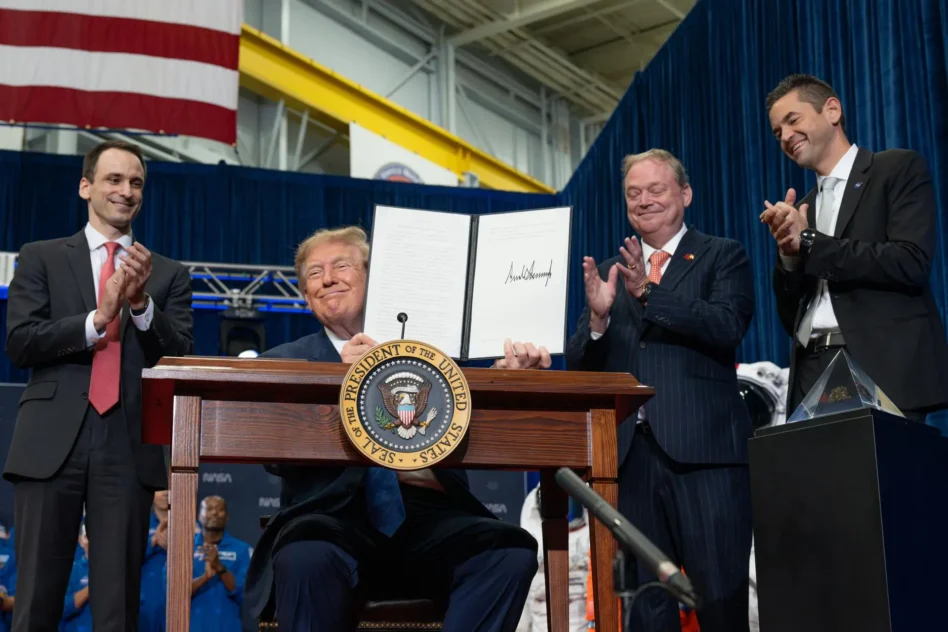
Ever since President Donald Trump signed an executive order on Aug. 28 establishing a US Space Academy, states have been coming out of the woodwork to make the case for why the school should call it home. The EO called for a civilian, NASA-led answer to the military services academies, and created a commission to sort out further details, such as curriculum, service requirements, and what would go into establishing the school.
Ballot access: On Sept. 10, NASA laid out initial details in an RFI, with formal proposals to potentially come later.
The plan: break ground by 2027, seat an interim cohort of 300 students at partner institutions in 2028, and open a permanent campus by 2031. For scale, the last state competition Trump launched—Space Command HQ—kicked off in 2019 and wasn’t settled until last year.
Not just any location can become a Space Academy. NASA wants:
- A permanent site of at least 300 acres,
- Proximity to NASA or university facilities, which would be a plus,
- Capacity for 1,200 undergrads, scalable to 4,000.
Stump speeches: All states were invited to bid, with each submitting a single proposal routed through the governor’s designee. Proposals must include location, timeline plans, cost estimates, and possible partnerships.
Submissions aren’t due until October 26, but a few states are already working the crowd:
- Texas: Gov. Greg Abbott (R-TX) is the only governor to announce a team, tapping state Rep. Greg Bonnen (R-TX) to build a bid around JSC with the Texas Space Commission. Sen. Ted Cruz (R-TX) and Rep. Brian Babin (R-TX) are lobbying too—loudly enough that Trump called Cruz out at the EO signing.
- Florida: Sen. Ashley Moody (R-FL) filed the STARS Act on Tuesday to write Florida into law as the academy’s home—which would have to pass through Sen. Cruz’s committee—and is working with state aerospace authority Space Florida on the RFI response. She and Sen. Rick Scott (R-FL) also led a bipartisan delegation letter to the White House on Sept. 3 touting KSC and the Cape.
- Alabama: Rep. Dale Strong (R-AL) rounded up the delegation for a letter pitching North Alabama, leaning on Marshall, Redstone, the Missile Defense Agency, and Army SMDC—and the future home of US Space Command.
- Nevada: Spaceport developer Rob Lauer isn’t waiting on the governor, and wants 500 acres of desert west of Las Vegas. His parcel runs 240 acres—short of NASA’s floor—but butts up against 100,000 acres of Bureau of Land Management holdings.
NASA will review the responses and make recommendations to the commission, which reports to the White House for a final decision. However, standing up a service academy takes an act of Congress, and no lawmakers sit on the commission.
Split ticket: Colorado looks strong on paper with the Air Force Academy, multiple Space Force bases, and Space Command HQ, which won’t finish decamping for Huntsville until 2031. But Sen. John Hickenlooper (D-CO) called the plan “duplicative, costly, and unserious.” Chief of Space Operations Gen. Douglas Schiess also said this week the Space Force will keep commissioning ~100 Guardians a year out of the Air Force Academy regardless.
Undeclared: With weeks left on the clock, expect a few more hats in the ring:
- Ohio: Contains NASA Glenn, Wright-Patterson, and the National Space Intelligence Center. It previously bid for Space Command HQ but was not a finalist.
- New Mexico: Home to Spaceport America, White Sands, and Kirtland—and one of six finalists for Space Command HQ.
- Mississippi, Virginia, Maryland, California, and Louisiana: All home to existing NASA facilities, and deep aerospace benches.
NASA Signs Space Nuclear Pact, Says Moon Base Is Ahead of Schedule
Isaacman gave updates at the White House’s “Science: A New Golden Age Summit.”

DOT Proposes Changes to Part 450 Licensing Rules
On Tuesday, Transportation Secretary Sean Duffy announced five proposed FAA rules aiming to streamline and modernize commercial space launch and reentry regulations.

DOE Announces $400M for Frontier Science Research
The Department of Energy is super-charging research into bleeding edge energy tech.
White House Publishes S&T Strategy for National Security
The Office of Science and Technology Policy released its National Security Science & Technology Strategy.

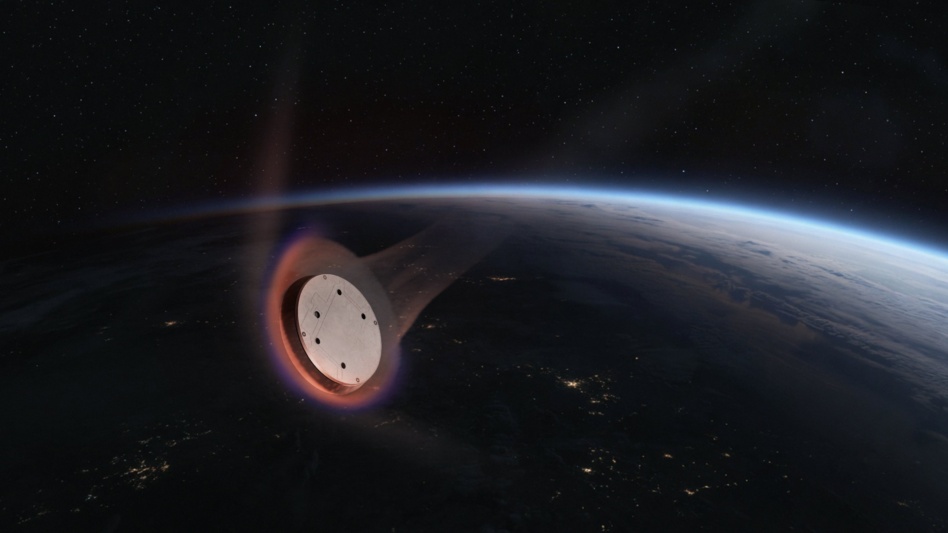
PARIS, FRANCE—Luxembourg-based Space Cargo Unlimited announced this week that it secured a dedicated mission on SpaceX’s new Starfall reentry vehicle, expected to launch on a Starship rocket in 2028. CEO Nicolas Gaume told Payload that the company has already sold one-third of the vehicle’s 1,000-kg capacity—and expects to have customers locked in for half of the vehicle by the end of the year.
Demand appears to be skyrocketing, thanks to a new wave of pharmaceutical companies and researchers realizing that microgravity can provide benefits in drug discovery and research. As alternatives to the in-demand, retiring ISS begin to come online, Space Cargo is positioning itself to capitalize on as much of newfound supply as possible.
Howdy partner: Space Cargo aims to build relationships with a range of reentry companies to offer customers diverse options for sending manufacturing experiments to space and back, according to Gaume.
Keep reading