


Efforts by the US government to rain on Europe’s parade this week backfired.
Politico reported last week that the Trump administration pressured US space companies to skip French President Emmanuel Macron’s International Space Summit in Paris amid political disputes between the two countries. While that effort led SpaceX and Blue Origin to pass on the event, their absence failed to dampen the mood in Paris.
Instead, the summit highlighted how important Europe’s space industry has become to the global ecosystem, and featured a slew of new agreements between European and international space organizations worth billions of Euros combined.
“The choices we make now will shape our place in space for decades to come,” EU Commission President Ursula von der Leyen said in a speech at the event. “Europe begins from a position of strength. We have cutting-edge technologies, world-leading talent, and a strong space industrial base. But strength today is no guarantee of leadership tomorrow. To remain at the forefront Europe must act together, invest at scale, and turn our market into a competitive advantage.”
Acting together: Despite the future-facing nature of these comments, the International Space Summit proved that Europe is well underway on many of these efforts.
This week, Europe’s next-gen sovereign constellations took a step closer to reality. Eutelsat awarded major contracts to European satellite builders Airbus Defence and Space, Aerospacelab, and Thales Alenia Space to build satellites and payloads for Eutelsat’s OneWeb constellation, as well as for Europe’s IRIS² secure-comms constellation. The contracts include:
- €2.4B in commitments to Aerospacelab to act as the prime contract for 264 IRIS2 sats;
- Undisclosed funding to Airbus Defence and Space to build the remaining 66 sats;
- And €500M in funds to Thales Alenia Space to build the payloads for all 330 IRIS2 sats.
Eutelsat also announced plans to partner with French ground-station-as-a-service startup Skynopy to build a 100+-antenna-strong ground station to service the LEO market, and tapped German-headquartered OroraTech to provide at least 48 thermal-infrared payloads on the next batch of Eutelsat’s OneWeb LEO-comms constellation.
But the achievements notched this week are only the beginning. Throughout the event, ESA Director General Josef Aschbacher called on the European space industry to work harder to increase its sovereign capabilities.
- Aschbacher urged satcom operators to coordinate their satellite plans to reduce silos.
- He also proposed Europe build its own capabilities to bring astronauts to orbit, which would reduce the region’s reliance on NASA.
Investing at scale: Europe has lagged behind the US and China in private funds available for space projects, but the summit provided evidence that the region is in the midst of a financial renaissance.
On Tuesday, The Exploration Company announced the closing of a $450M (€386.9M) Series C to fund the development of its Earth-return vehicle and reusable, heavy lift rocket engine, in one of the European space industry’s largest scale-up fundraises to date.
Yesterday, Loft Orbital and Marlan Space—along with their joint venture in the UAE, called OrbitWorks—announced plans to invest $1B (€860M) in new funds to develop a 50-satellite AI constellation. While the assembly, integration, and testing of these new sats will occur at OrbitWorks’ facility in the UAE, the funds are expected to be spread across the European supply chain.
“We are incorporating best-in-class providers of each modality. Some satellites will be developed by Loft and OrbitWorks, others will be sourced from partners,” Loft CEO Pierre-Damien Vaujour told Payload via email.
And even more funds for large-scale space projects might be just over the horizon. During the summit, Ashbacher urged the region to spend more in the space arena, calling for €10B in investment over the next 10 years to achieve regional independence.
Competitive advantages: The summit also included many examples of Europe’s strength on the international stage.
For example, Arianespace signed no less than seven agreements across the two-day event, in what the company said is the largest order intake for Ariane 6 since the rocket entered service.
- Eutelsat ordered two Ariane 64 launches for its OneWeb constellation.
- Amazon LEO ordered six additional Ariane 64 launches for its growing satcom constellation.
- The Exploration Company signed a launch agreement for the demonstration mission of its Nyx Earth return vehicle.
- US satellite manufacturer AscendArc booked an Ariane 6 mission to GTO for KT SAT’s KOREASAT 9 telecom satellite.
- Arianespace also signed MoUs with ICEYE, EnduroSat, and AgenaSpace to explore future launch opportunities.
“Europe’s heavy-lift launcher has a dual ambition: to ensure Europe’s autonomous access to space and compete in the international commercial market,” Arianespace CEO David Cavaillolès said in a statement. “The announcements made at this Summit show that these two ambitions go hand in hand, each strengthening the other.”
And demand for European space capabilities didn’t end there.
- MaiaSpace signed a multi-launch agreement with iQPS for missions starting in 2029.
- Italian launch broker RIDE! Space signed a contract with Indian AI ODC startup TakeMe2Space to launch two satellites in 2028.
- Axiom Space signed an MoU with ESA to collaborate on future astronaut missions to orbit.
- ESA also signed an agreement with Vast to have Greek astronaut Adrianos Golemis join Vast’s PAM mission to the ISS.
- Firefly Aerospace and SSC Space agreed to fly multiple Firefly Alpha rockets from SSC’s Esrange Space Center in Sweden NET 2028.
Bottom line: While the Trump administration might have hoped that the reduction in US presence would lead the conference to be a bust, the influx of funding and deals announced during the event proved otherwise. Europe still has a long way to go before its space industry can be truly self-sustaining, but the summit showed that the industry is headed in the right direction, and capturing a lot of international demand.
As the spat between Europe and the US legislators continues, Europe is finding itself with newfound strength. Its region-wide projects are gaining steam, and its competitiveness on the global stage is increasingly hard to ignore.
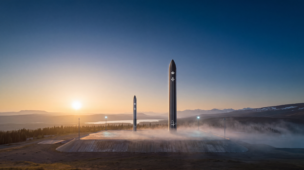
Reaction Dynamics Targets 2031 for Borealis Medium-Lift Launch
In the contest to build up commercial launch capabilities in Canada, Quebec-based startup Reaction Dynamics has entered a new weight class.

Seraphim Space Investment Trust Doubled its Value in 2026
Seraphim’s major holdings—ICEYE, ALL.SPACE, D-Orbit, HawkEye 360, and Xona Space Systems, which together represent more than 75% of the firm’s portfolio—all had a great year, and that success has trickled upwards.
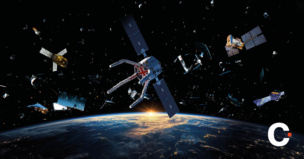
UKSA Taps ClearSpace for Country’s First Debris Removal Mission
The UK Space Agency is dressing up as a waste-management company for Halloween.
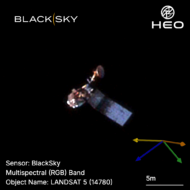
BlackSky Renews HEO Deal, Adds Gen-3 Imagery for Space Domain Awareness
BlackSky Technology inked a seven-figure deal to extend its partnership with Australian non-Earth imaging (NEI) provider HEO for another year.


Hot off a European hyperspectral partnership, Canadian EO firm Galaxia is reaching even higher with new funding.
The Halifax, Nova Scotia-based company announced on Thursday that it had raised $4.5M CAD ($3.25M) to continue its mission to make EO sats that can process info in orbit at the speeds required for today’s decision-makers. Quebec’s Amiral Ventures and Invest Nova Scotia co-led the round.
Galaxia, which partnered last week with Belgium’s Simera Sense to bring hyperspectral wavelengths into Galaxia’s sat systems, says the cash infusion will cover a to-do list spanning deploying new sats, expanding hybrid space networking, and expanding sovereign space capabilities. All of that will require curated space information, which also forms part of Canada’s new defense strategy.
Keep reading