

Muon Space announced today it closed a $250M Series C to expand its satellite production capacity and broaden the types of missions it can fly.
Eclipse Capital led the round, which included additional participation from Galvanize, Google, Salesforce Ventures, Wellington Management, I Squared Capital, Woven Capital, Radical Ventures, Congruent Ventures, Costanoa Ventures, Activate Capital, ACME Capital, ArcTern Ventures, and Overlap Holdings.
With the Series C in the bag, Muon’s total equity financing stands at $386M+.
Busy, busy: The new capital comes amid a lively year for Muon. Since its founding in 2021, the company has launched 11 satellites—seven of which flew in the first half of 2026.
These new launches helped the company kick off operations for two customer constellations—Sierra Nevada’s Vindlér 2.0 RF-detection constellation, and the FireSat constellation from Earth Fire Alliance and Google.
Muon also has 50+ customer satellites in production, with 13 already manifested to launch in the next year.
“From everyone who’s been working in space [for] 10, 20, 30 years or more. I don’t think any of us have seen a market that is as active as we’re seeing today,” Muon Space President Gregory Smirin told Payload. “Our pipeline is quite a bit above $10B, and we’re very conservative about what makes it into our pipeline.”
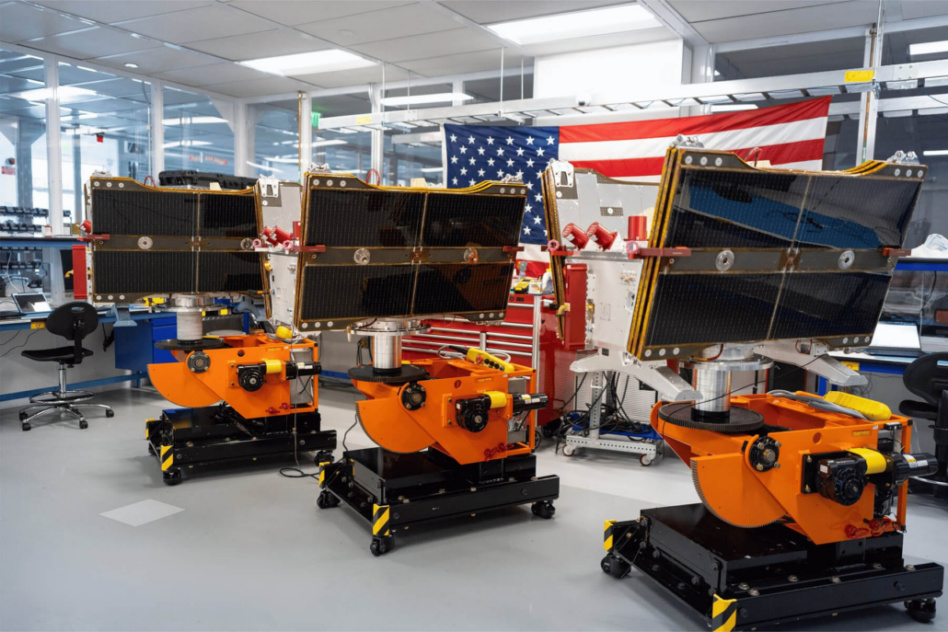
Run faster, jump higher: Unlike most satellite manufacturers, Muon is focused on more than just the bus. Instead, the company delivers complete spacecraft—equipped with payloads and software—to help customers deploy space capabilities quickly, and with little to no heavy lifting.
With an additional $250M in the bank, Muon plans to double down on this strategy, by increasing its production capacity and broadening the set of missions it can offer customers.
In June, Muon cut the ribbon on a manufacturing facility in San Jose, CA, which the company says will be able to produce 500 satellites annually by 2027. The new funds will help Muon scale to this full capacity, which is 10 times higher than its previous max capacity.
Muon also plans to continue investing in the R&D of advanced payloads and spacecraft systems to target both immediate customer needs, as well as emerging space markets such as on-orbit compute, and real-time, high-bandwidth communications.
For example, in June, Muon unveiled its largest spacecraft to date—Condor-Ultra—which is geared toward high-power applications, and capable of both deploying from launchers today and future ones such as SpaceX’s Starship.
“[Condor-Ultra] is for an existing customer…[with] a communications operation, but it’s the same class that can expand to do much heavier, higher power orbital compute,” Smirin said. “That same platform scales in a modular way into what can become a full data center.”
Exclusive: EraDrive Lands $13M DoD Award For Autonomy Module
EraDrive won a $13M DoD award, under which the Space Force will buy an undisclosed number of the company’s Era-Node vision-based autonomy modules.
WarpWare Closes Pre-Seed to Bring Agentic Tools to Flight Software
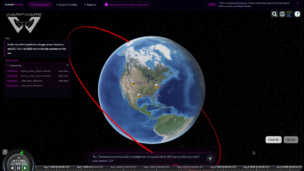
CO-based WarpWare closed its $1.2M pre-seed round today to expand what it calls an AI-enabled engineering platform for space missions.

RATLOG Wants to Cut ~90% of a Rocket Engine’s Parts
The heavy-lift rocket startup debuted on Y Combinator as part of the Fall 2026 batch.

Seraphim Space Investment Trust Doubled its Value in 2026
Seraphim’s major holdings—ICEYE, ALL.SPACE, D-Orbit, HawkEye 360, and Xona Space Systems, which together represent more than 75% of the firm’s portfolio—all had a great year, and that success has trickled upwards.

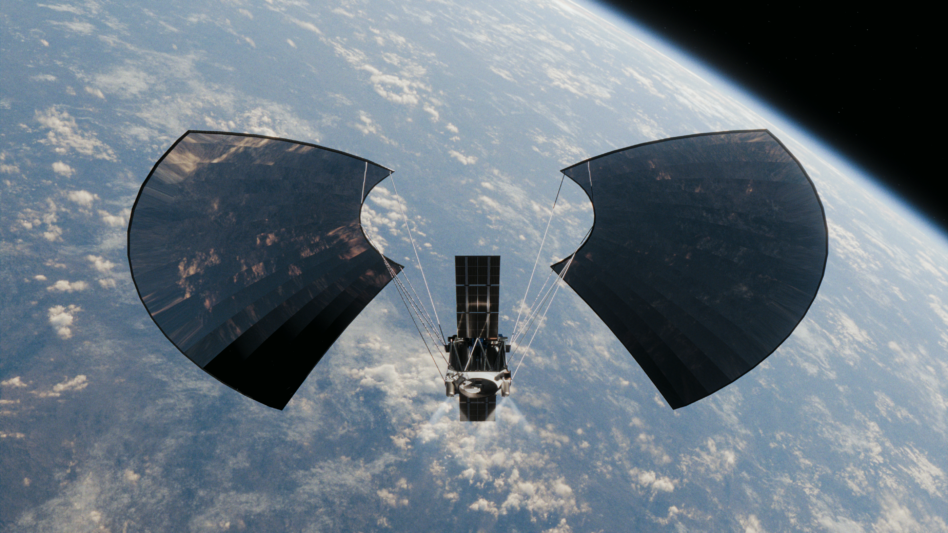
Portal Space Systems CEO Jeff Thornburg wanted to avoid the headaches founders are facing trying to reach orbit. So he bought a whole rocket.
The company announced Thursday that it has purchased an entire SpaceX Falcon 9 rocket for its Motus Via Sol 2028 mission. While Thornburg said Portal is expected to take up about half of the fairing with its own spacecraft, it’s working with launch integrator Maverick Space Systems to sell the other half to customers looking for rideshare opportunities in a turbulent market.
“I needed to secure Portal’s launch future for the next couple of years. You’re very familiar with all of the angst over launch [availability]….It’s mainly about controlling the destiny of getting our products on-orbit and fulfilling our customers’ mission,” he told Payload—though he acknowledged seeing Portal branding on the side of a Falcon 9 is a nice benefit too.
Keep reading