


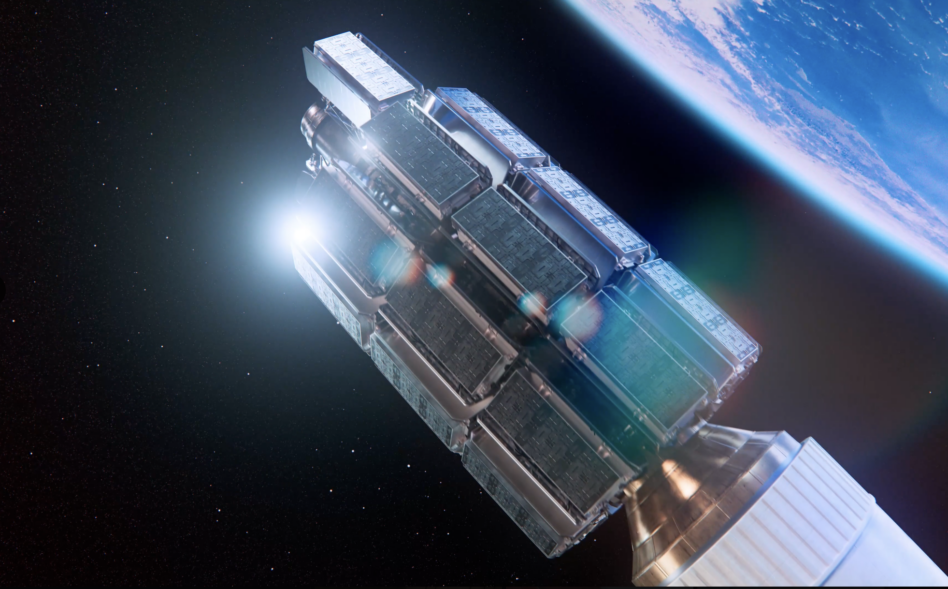
Amazon ($AMZN) is entering the D2D game after filing a request with the FCC on July 24 to launch up to 5,105 LEO satellites to beam voice, text, and data directly to smartphones.
The constellation—officially known as the Amazon Leo Direct-to-Device System—would run on spectrum from Globalstar ($GSAT), which Amazon is buying for $11B+ in a deal not expected to close until 2027. Amazon is asking regulators to sign off before it owns the airwaves, which is the same move SpaceX ($SPCX) made with its own D2D filing last year.
The details: Amazon’s FCC filing lays out the shape of the constellation:
- 5,105 sats across five orbital shells, ranging from 510 km to 580 km in altitude;
- Deployment starting in 2028, with six-to-eight-year satellite lifetimes;
- Runs on Globalstar’s 1.6/2.4 GHz spectrum;
- Reaches smartphones with satellite-capable chips built in, with no add-on hardware needed.
The company highlighted Globalstar’s existing Apple ($AAPL) relationship, which Amazon would inherit, along with a plan to collaborate on future services.
The launch crunch: The new system will operate in conjunction with Amazon Leo’s already-approved satellite broadband systems, as well as Globalstar’s existing HIBLEO and C-3 constellations. However, the original Leo network is experiencing delays.
Amazon has 390+ sats in orbit, but was initially planning on having ~1,600 up by this July—roughly half of its Gen 1 fleet. The FCC scrapped the interim deadline in June, but Amazon will still owe all 3,232 first-gen sats by July 2029.
The main holdup has been launch capacity, not manufacturing. Amazon’s broader Leo effort has been slowed by a rocket shortage, drawing on a shared pool of ULA, Arianespace, Blue Origin, and SpaceX vehicles. In 2028, Amazon plans to begin launching the D2D satellites in parallel with its Gen 1 broadband constellation.
The company already has enough launches under contract to finish the Gen 1 system and begin an initial D2D deployment, an Amazon spokesperson told Payload via email.
Pay to play: In April, the FCC locked down incumbent rights to Mobile Satellite Service spectrum. In an attempt to preserve market certainty for companies already using these bands, the commission effectively shut out Amazon and others from accessing these bands on their own.
Amazon’s filing is the latest sign that all of the operators chasing D2D landed on the same response—buying or leasing was the only way in. Over the past year:
- SpaceX bought EchoStar’s spectrum for ~$17B;
- Amazon is buying Globalstar for $11B+;
- Rocket Lab is buying Iridium for ~$8B.
Add it all up and that’s ~$36B in a single year to break into the D2D market.

Exclusive: Meridian Space Spins Out from SpinLaunch
“Meridian will carry forward the satcom infrastructure business… SpinLaunch will continue to build on its vision for a lower-cost approach to launch, with further applications in hypersonics to support the Golden Dome program and in the lunar economy,” Meridian Space CEO Massimiliano Ladovaz told Payload.

Rocket Lab CFO Adam Spice Predicts More M&A Deals on the Horizon
Iridium shareholders voted overwhelmingly to approve the company’s acquisition by Rocket Lab. According to Rocket Lab CFO Adam Spice, there’s more M&A on the horizon.

Viasat and Space42 Commit Up to $1B to Equatys Joint Venture
Space42 and Viasat agreed to formally establish Equatys, a shared satellite-and-ground-infrastructure company for D2D connectivity and advanced mobile satellite services.
TrustPoint Taps EnduroSat to Build 40-sat GNSS Constellation
EnduroSat will build a 40-sat constellation for TrustPoint, the startup building a commercial GNSS service, the companies announced today.


Africa is jockeying to become one of the next world space powers.
The continent, once dominated by a few national space agencies and reliance on international space infrastructure, is quickly building a space ecosystem of its own. What lies ahead, according to researchers at The Aerospace Corporation’s Center for Space Policy and Strategy (CSPS), will be largely dependent on how the African Union’s newly inaugurated African Space Agency (AfSA) manages its rollout.
The Aerospace Corporation released a report today diving into the progress the AfSA has made in its first year of operations, and charting possibilities for what might lie ahead.
Keep reading