


Daniel Biedermann is a partner at NewSpace Capital.
Before SpaceX, the biggest hurdle to the development of the space sector was our ability to get payloads into space reliably and inexpensively. Each launch was expensive, with the cost often running into the tens of thousands of dollars per kg, and most of the rocket itself was discarded after being launched. Moreover, there were relatively few opportunities to launch each year, and delays were common.
But the creation of reusable first-stage boosters by companies like SpaceX began to chip away at that high price tag. The rate of launch increased to the point where it became routine rather than exceptional. Rideshare missions—where many small satellites rode into orbit on the same rocket—became possible. And the development of the SpaceX Starlink fleet forced manufacturing and launch to speed up.
Whatever you think of SpaceX’s maverick founder and CEO, he and his team took on the main constraint at the time that was preventing the space industry from taking off.
This invites us to wonder: What’s the next great breakthrough in space that could force a similar paradigm shift?
The spectrum puzzle: Spectrum is a critical limiting factor for the industry—one that the European Union is working hard to tackle. As spectrum is a scarce—if not non-dilutive—resource, SpaceX’s purchase of EchoStar’s wireless spectrum licences and Amazon’s planned acquisition of Globalstar both showed how much the big players in space are willing to pay for greater spectrum access.
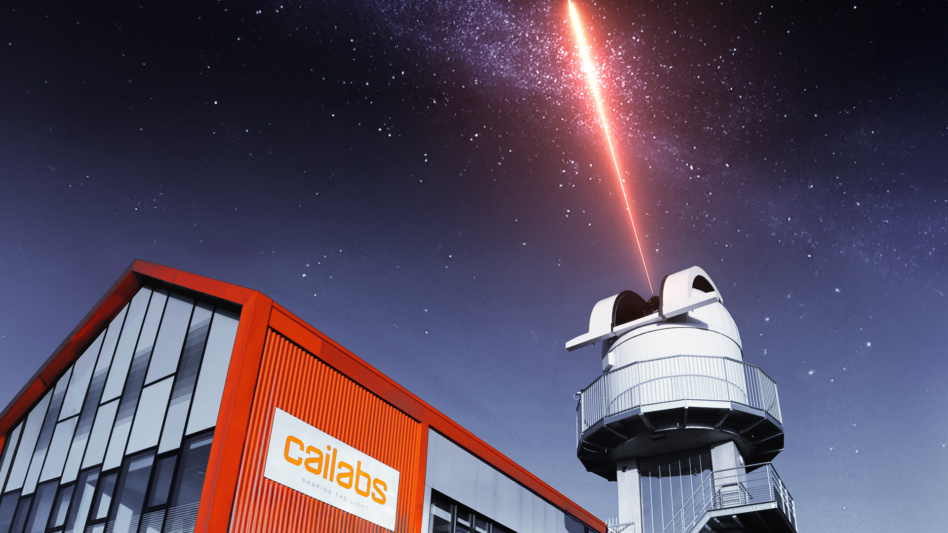
Any technology that allows spectrum to be used more efficiently has real value. Examples of this technology are phased-array antennas—which allow for more accurate beam-steering and more efficient use of available spectrum—and optical or laser communications, which lets operators bypass wireless spectrum entirely by operating in an entirely different band.
Bigger and better: For decades, the traditional satellite was an enormous GEO spacecraft that took two years to design and four to build, with a lifespan of 15-20 years.
- GEO remains an important and commercially viable space resource, but that model is becoming increasingly difficult to reconcile with the speed at which customer requirements are changing.
- The next GEO satellites will have to be smaller, faster, and cheaper to build, as well as more agile and more capable of being reconfigured to meet new demands after launch.
Large satellites have tended to be expensive and slow; cheaper satellites have very little room or power.
However, thanks to the changing economics of space, companies are starting to find ways to mass-produce mega-satellites able to carry thousands of kilos of payloads and supply power of about 10 times that of the typical constellation satellite. As a result of this kind of innovation, customers can fly much larger radars, communication systems, processors, and defence payloads without having to design a whole spacecraft from scratch.
A small number of powerful mega-satellites could replace hundreds of smaller, weaker ones, cutting the costs of manufacturing, launch, control, and network. This could make entirely new kinds of space business economically viable. Whether smaller, more adaptable spacecraft or larger, standardised platforms, what matters most is whether they can meet the customer’s needs at the right price and speed.
Next-gen launch: SpaceX made launch cheaper, easier and more frequent. But that success has also left much of the market reliant on one provider. SpaceX is now turning its attention towards Starship instead of Falcon 9, providing an opportunity for companies such as Relativity Space—and other newer entrants—to occupy some of the market currently served by Falcon 9. Developing a reliable launch vehicle that can be built and flown at a genuinely commercial rate is a long, tortuous process.
Nevertheless, the next few years should bring several new contenders. Greater competition will cut costs further, provide redundancy and stability if one company pivots, increase launch availability, and give satellite operators a wider range of vehicles suited to different missions.
Doing more with less: Every kilogram that a satellite saves can cut the cost of its launch, or allow operators to add more fuel, power, or payload. This is why advanced materials potentially herald another major breakthrough in space.
- These materials can make space systems cheaper, lighter, stronger, and more reliable.
- Not only can a lighter satellite (or even a lighter rocket) carry more, but a tougher heat shield can make it easier to reuse, and more radiation-resistant electronics can keep it working longer.
Better materials can lower the risk of a satellite either failing, needing repairs, or needing more testing, thus lowering the cost of insurance. In simple terms, advanced materials also enable missions once thought impossible. They increase the amount of useful work that can be done by every kilogram sent into space. Increasingly, such materials can be produced at low cost and at scale.
Awareness and autonomy: It’s no secret that space is getting more congested and contested.
There are around 16,000 operational satellites now in space, one recent analysis suggests—and not all of those satellite operators are benevolent. For this reason, mission managers have to understand what is going on around their satellites. As it is, many operators are unable to tell the difference between the potentially hostile actions of an adversary, a routine manoeuvre, and an accidental action. That leaves those operators having to act from a place of uncertainty which, realistically, means not acting at all.
But optical sensors—in effect, powerful cameras—can identify satellites, detect changes in their configuration, and help work out what spacecraft are actually doing.
- Knowing where an object is may prevent collisions.
- It will also help to establish whether an object has an operator—or if it’s uncontrolled debris—and what that operator’s motive is.
New cameras can perceive tiny objects from kilometres away, and in high resolution. When we also consider advances in autonomy, which allow satellites to act without needing guidance from the ground, it’s easy to picture an orbit where spacecraft can detect threats and take appropriate action—without any need for a human operator to direct it.
Final thought: This is not an exhaustive list. I could also have mentioned 5G and 6G, orbital refuelling, new methods of propulsion, and even technology that aims to imitate what happens in the natural world. The beauty of the space sector today is its sheer dynamism, and the number of new technologies that are emerging all the time to address challenges in a way that wasn’t possible before.
There may be a further consequence of SpaceX’s success. Following the company’s IPO, early employees may use their newly liquid wealth to build and fund a new wave of space startups across almost every part of the sector. These founders have already seen how space systems can be built more effectively, quickly and cheaply. Given all of this, it’s unwise to be too certain about the particular shape that the future will take. Perhaps it’s wise just to say that the future looks very bright indeed.
Xona Raises $250M Series D to Scale Commercial GPS Constellation
Xona’s long-term plan is to build a ~258-sat constellation to offer an upgraded commercial alternative to government GPS networks.
Hewlett Packard Enterprise to Send AI Compute Module to the Moon
Hewlett Packard Enterprise ($HPE) is taking remote working to a whole new level.
WarpWare Closes Pre-Seed to Bring Agentic Tools to Flight Software
CO-based WarpWare closed its $1.2M pre-seed round today to expand what it calls an AI-enabled engineering platform for space missions.
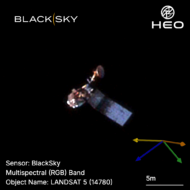
BlackSky Renews HEO Deal, Adds Gen-3 Imagery for Space Domain Awareness
BlackSky Technology inked a seven-figure deal to extend its partnership with Australian non-Earth imaging (NEI) provider HEO for another year.

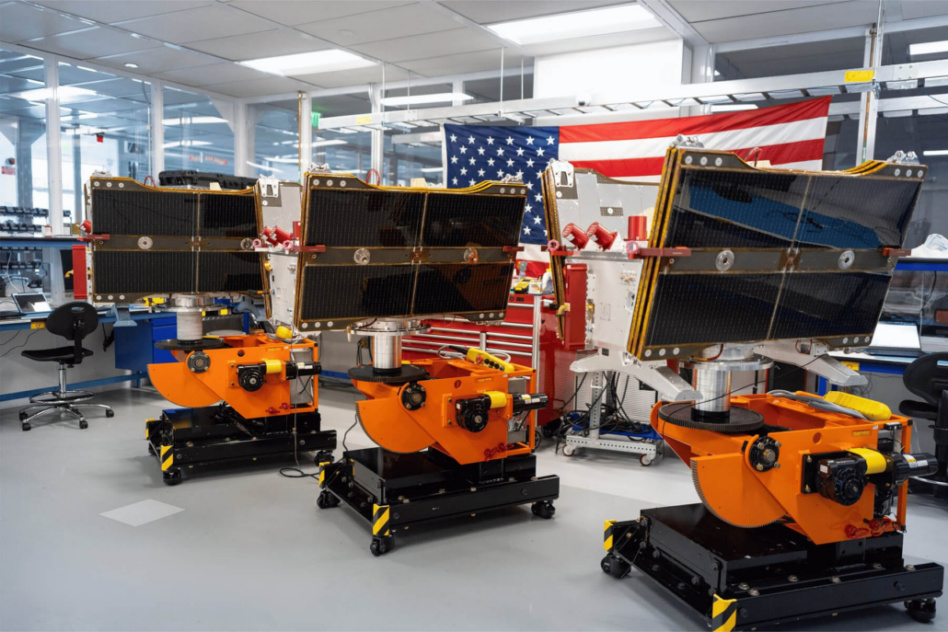
Muon Space announced today it closed a $250M Series C to expand its satellite production capacity and broaden the types of missions it can fly.
Eclipse Capital led the round, which included additional participation from Galvanize, Google, Salesforce Ventures, Wellington Management, I Squared Capital, Woven Capital, Radical Ventures, Congruent Ventures, Costanoa Ventures, Activate Capital, ACME Capital, ArcTern Ventures, and Overlap Holdings.
With the Series C in the bag, Muon’s total equity financing stands at $386M+.
Keep reading